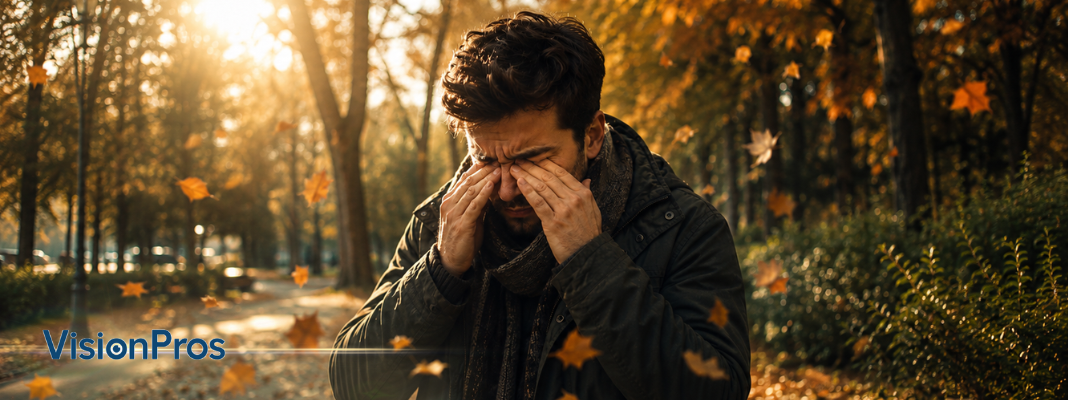









Summer sun can leave your eyes red, dry, tired, or sensitive to light. UV rays, glare, heat, wind, and water exposure all play a part. July is UV Safety Month, which makes it an ideal time to check how well your eyes are protected outdoors.
A good routine begins with UV400 sunglasses, a wide-brimmed hat, and safe contact lens habits. If you wear prescription eyewear or contact lenses, VisionPros carries options that fit well into a summer eye care routine.
☰ Table of Contents
- How the Summer Sun Damages Your Eyes
- What Are the Signs of Sun Damage to Your Eyes?
- How to Protect Your Eyes From UV Rays in Summer
- How Contact Lenses Protect Your Eyes From Sun Damage
- Protecting Your Eyes at the Beach, Pool, and Lake
- Protecting Kids’ Eyes From Summer Sun Damage
- Common Myths About Summer Sun and Eye Protection
- Summer Eye Protection Checklist
- FAQs About Summer Sun Damage and Eye Protection
- Protect Your Eyes With the Right Eye Care Habits
How the Summer Sun Damages Your Eyes
Sunlight includes ultraviolet radiation, also called UV radiation. You cannot see UV rays, but they still reach the eyelids, cornea, lens, and retina. Bright sunlight also creates glare, which can make outdoor plans feel harder on your eyes.
During UV Safety Month, eye care groups remind people to protect their eyes the same way they protect their skin. Sunscreen helps your skin, but your eyes need lenses, hats, and shade to block ultraviolet sunlight.
How UV Radiation Affects Your Eyes
UVA rays reach deeper into the eye. UVB rays are linked with surface irritation and sunburn-like eye injury, especially around reflective surfaces such as water, sand, pavement, and car windshields.
Photokeratitis or “Sunburned Eyes”
Photokeratitis is a sunburn-like injury on the front surface of the eye. It can happen after strong UV exposure near water, sand, snow, or other reflective surfaces. Common symptoms include:
- Red Eyes
 Whites of the eyes appear pink or red.
 - Tearing Eyes water more than usual after sun exposure.
- Gritty Feeling A gritty or hot, irritated sensation on the eye’s surface.
- Swelling Puffy or swollen eyelids after strong sun exposure.
- Light Sensitivity Bright light feels harsher and causes squinting or discomfort.
- Headache Sun glare and squinting can bring on a dull, tired headache.
- Blurry Vision Vision feels hazy or out of focus after time in strong sun.
- Eye Pain An aching or sharp discomfort in or around the eye.
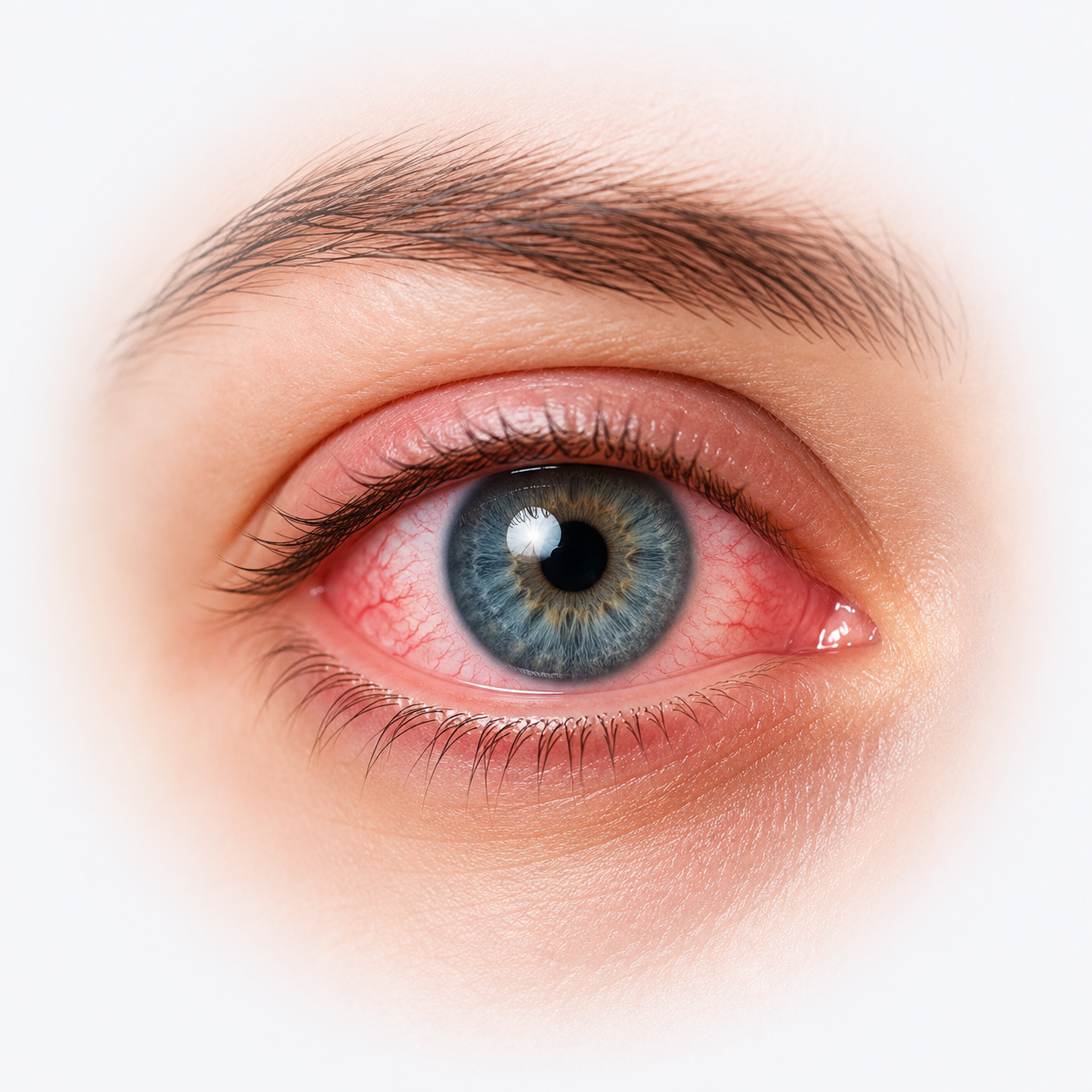
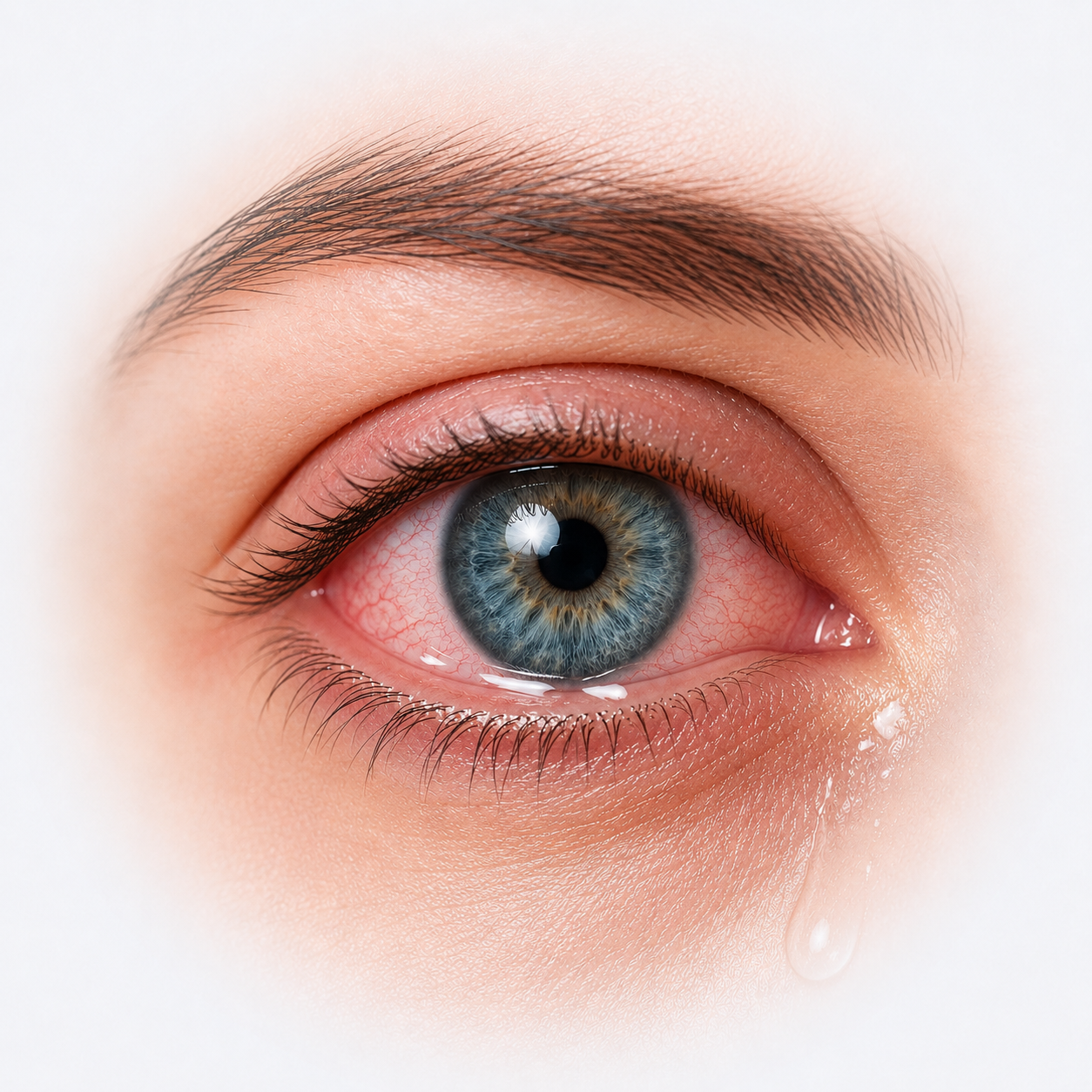
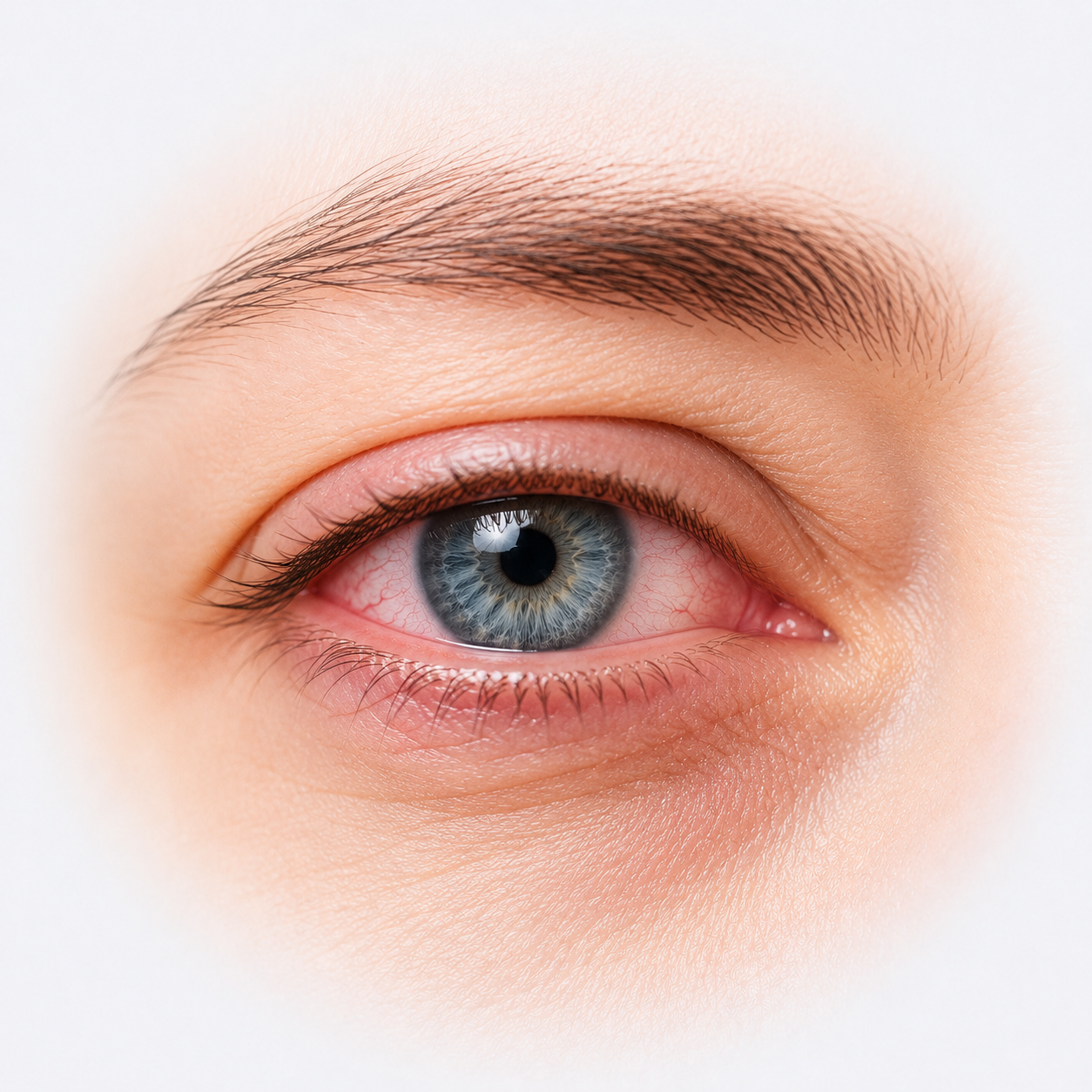
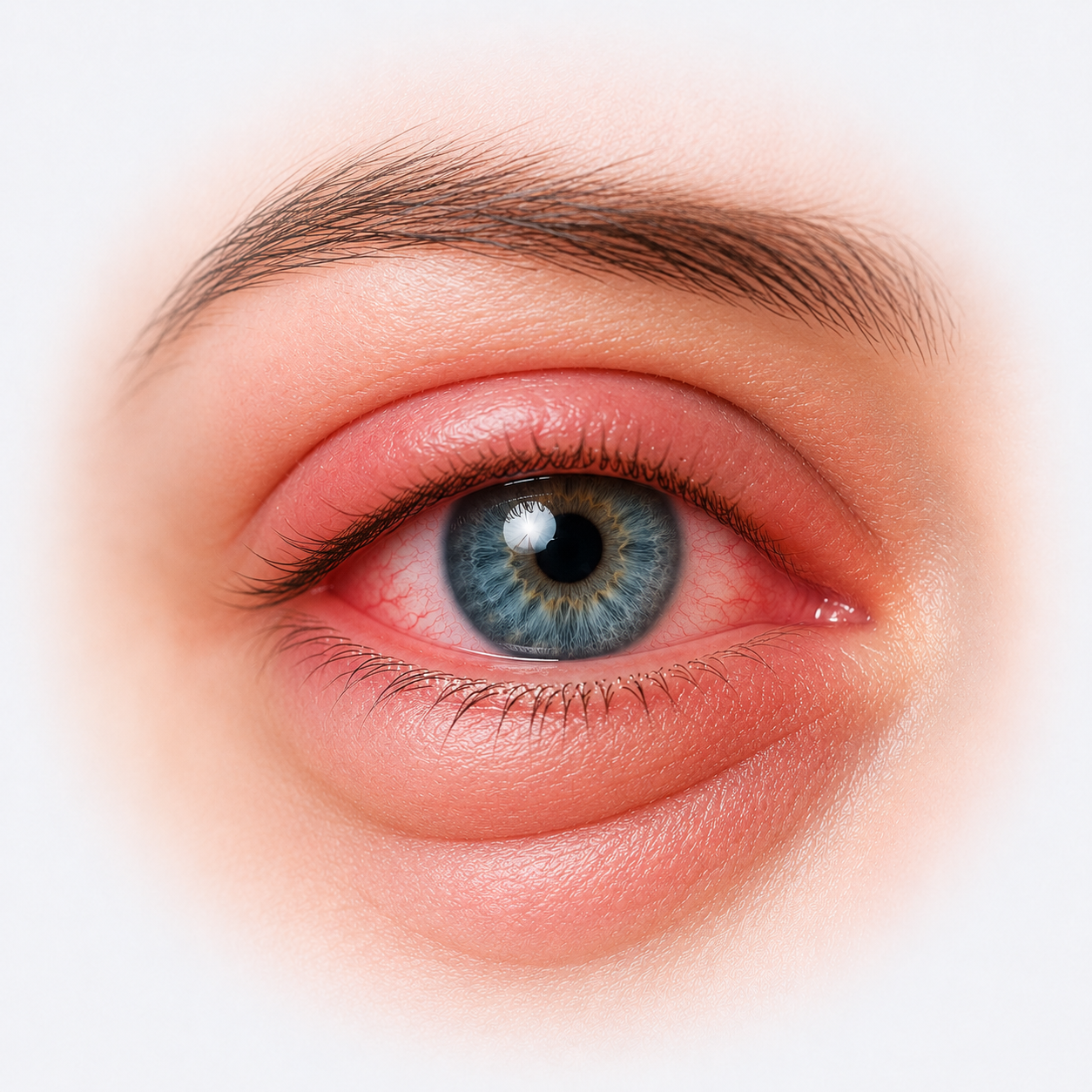
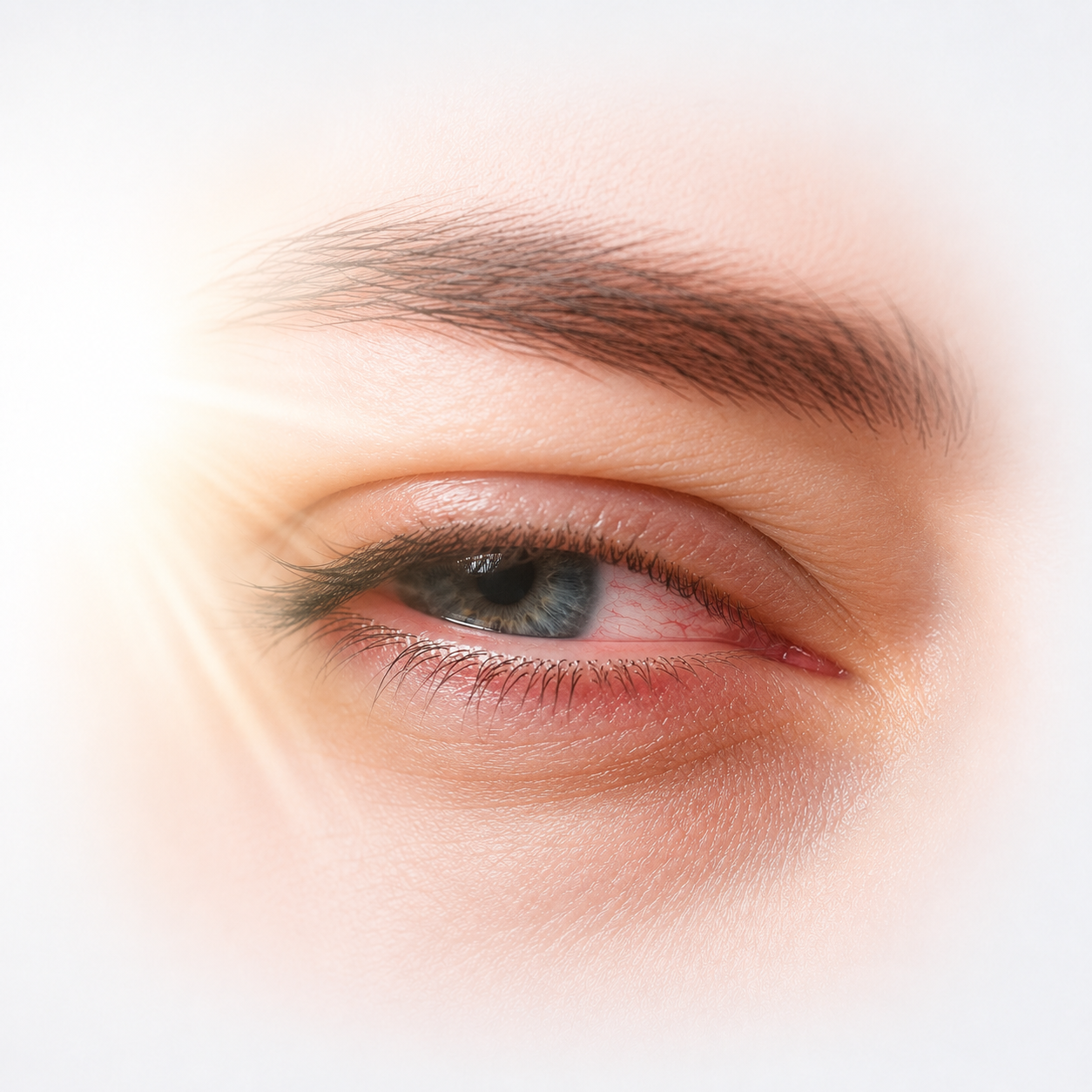
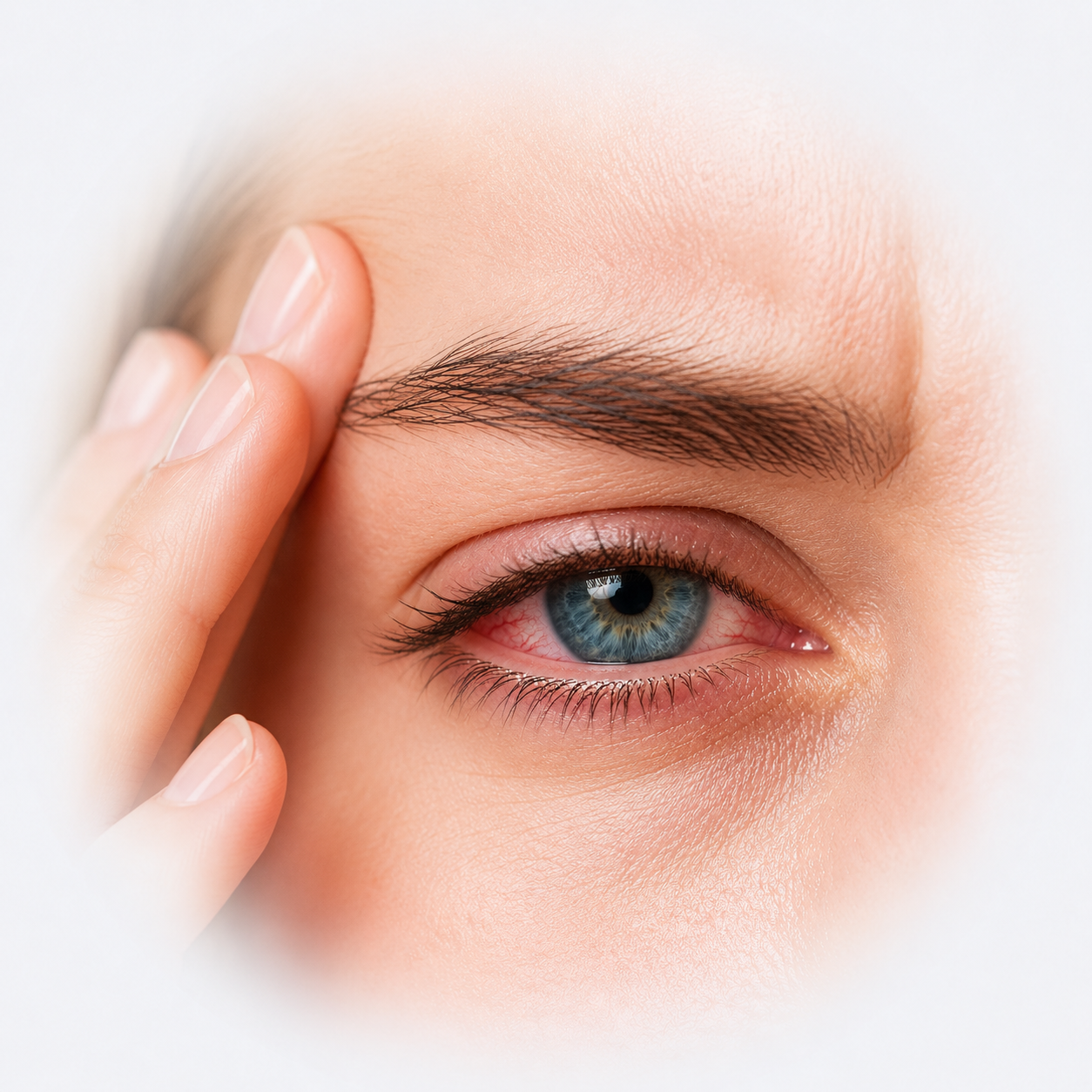
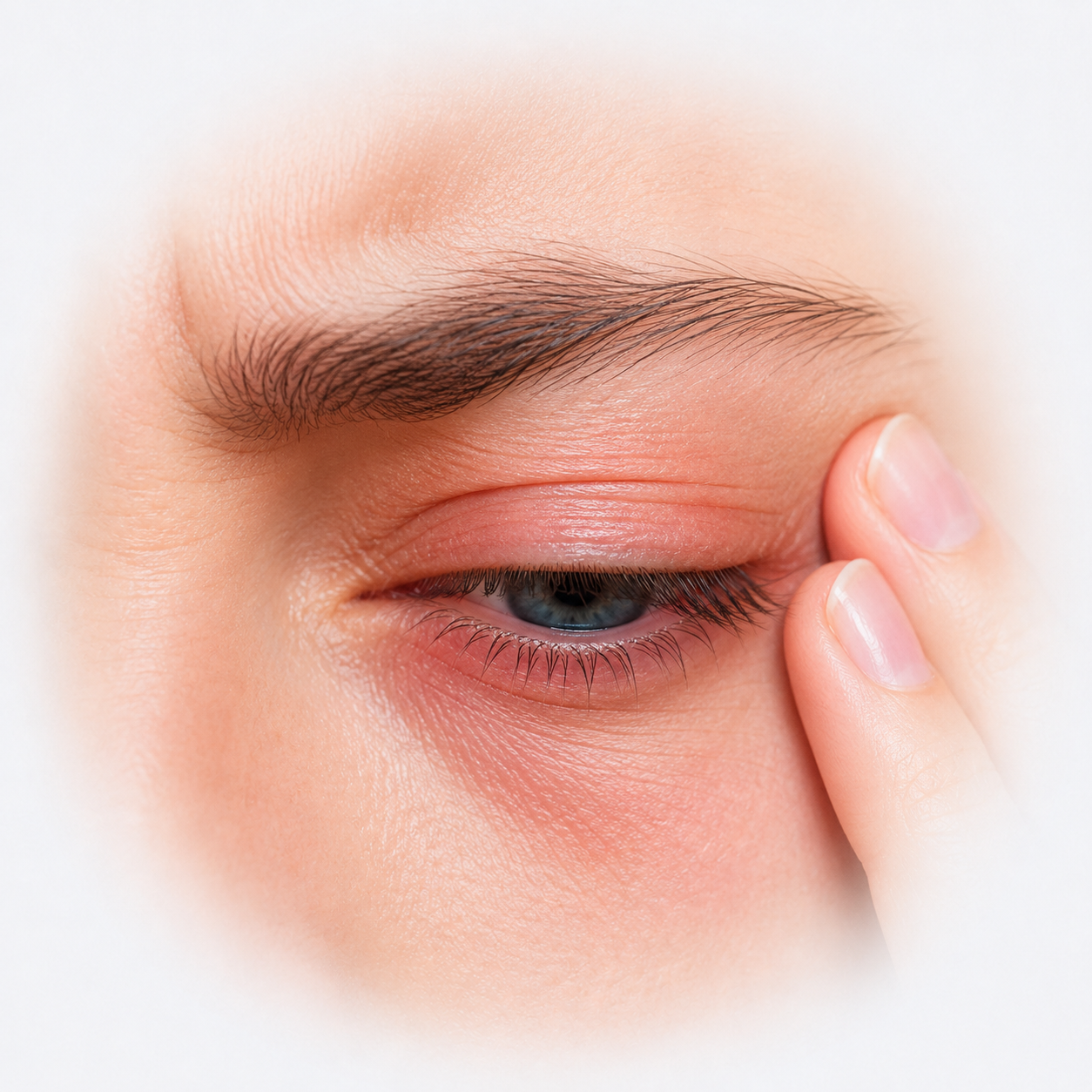
If your eyes hurt after a day outside, rest indoors, avoid bright light, and contact an eye doctor if symptoms feel severe or do not settle.
Cataracts, Macular Degeneration, and Growths on the Eye
Repeated UV exposure is linked with cataracts, growths on the eye, and other eye-health concerns. Cataracts cloud the eye’s natural lens. Pinguecula and pterygium can form after long-term exposure to the sun, wind, and dust.
What Are the Signs of Sun Damage to Your Eyes?
Eye discomfort after sun exposure should not be ignored. Mild irritation can settle after rest, but pain, vision changes, or strong light sensitivity deserves attention.
Redness, Burning, Tearing, and Light Sensitivity
Redness, burning, watery eyes, and light sensitivity are common after too much sun, wind, glare, or dry air. Move indoors, remove contact lenses if you wear them, and avoid rubbing your eyes.
Blurry Vision, Eye Pain, and When to See an Eye Doctor
Call an eye doctor if you have eye pain, blurry vision, swelling, discharge, severe redness, or light sensitivity that does not settle. Contact lens wearers should get checked quickly if symptoms start after swimming or water exposure.
How to Protect Your Eyes From UV Rays in Summer
Summer eye protection works better when you layer a few habits together. Sunglasses protect your eyes directly, while hats, shade, timing, and the UV Index reduce extra exposure.
Wear Sunglasses With 100% UV Protection or UV400 Lenses

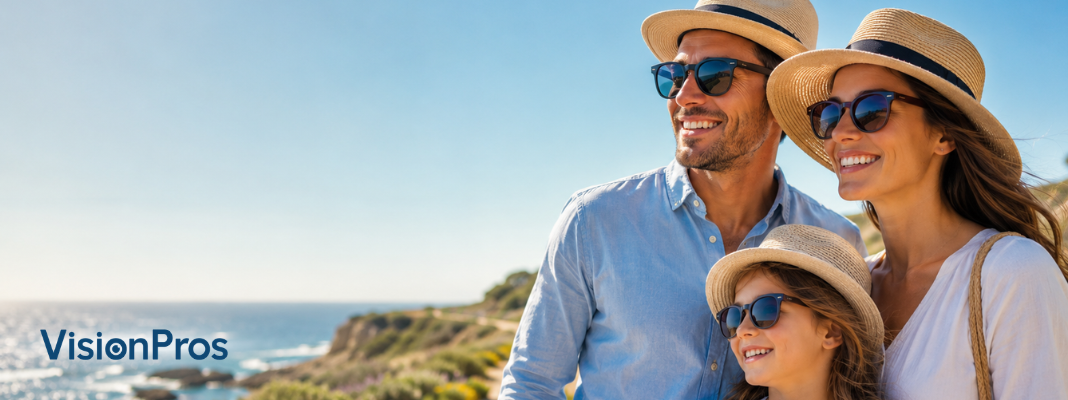
Look for sunglasses labeled 100% UV protection or UV400. This means the lenses block UVA and UVB rays up to 400 nanometers. Dark tint alone is not enough. A very dark lens without UV protection can make your pupils widen, which lets more UV reach the eye.
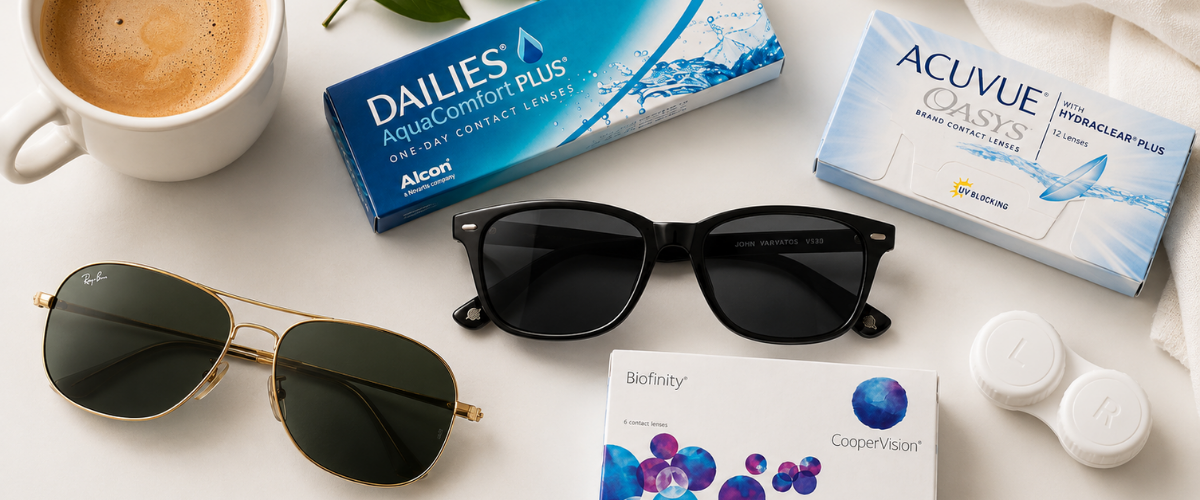
VisionPros carries sunglasses across everyday, driving, sport, and designer styles. Ray-Ban Erika works well for a softer everyday look, Ray-Ban Clubround adds a retro feel, Ray-Ban Cockpit gives a smaller aviator shape, and Oakley OO9188 fits active outdoor routines. For UV Safety Month style ideas, refer to our guide to the biggest styles for National Sunglasses Day.
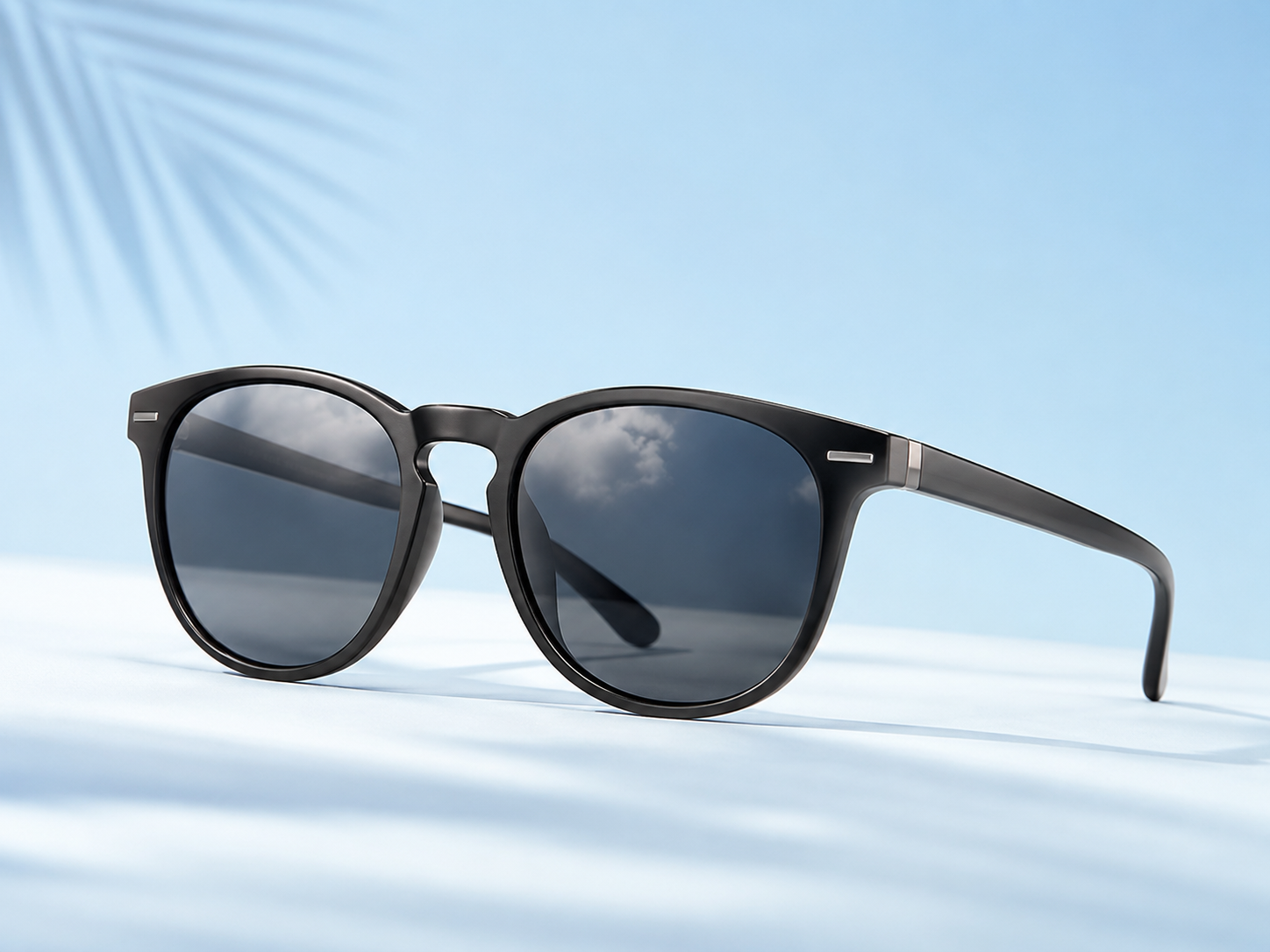
UV400 Everyday Sunglasses
Classic and wraparound frames with full UVA/UVB protection for daily wear.
Shop Now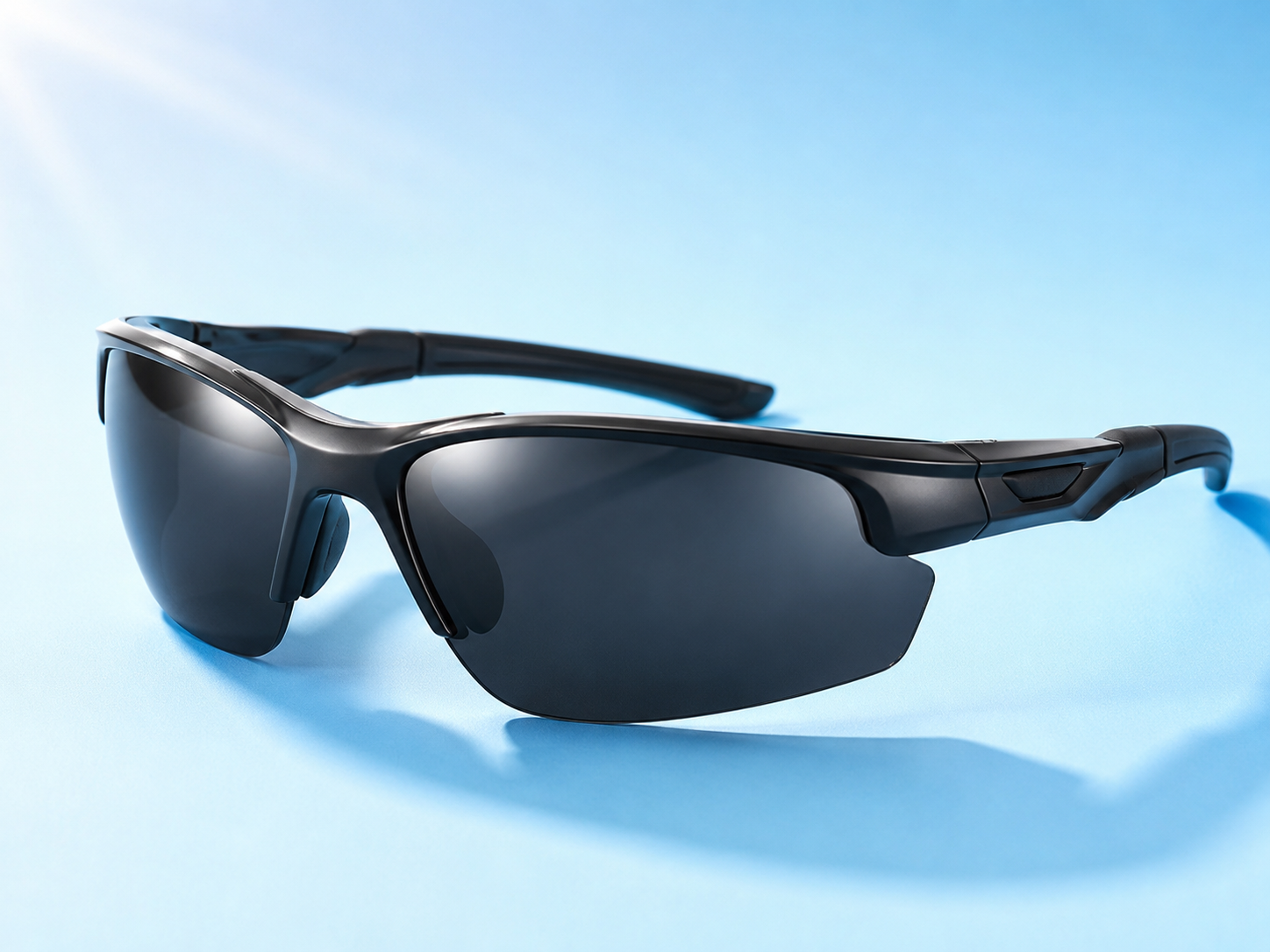
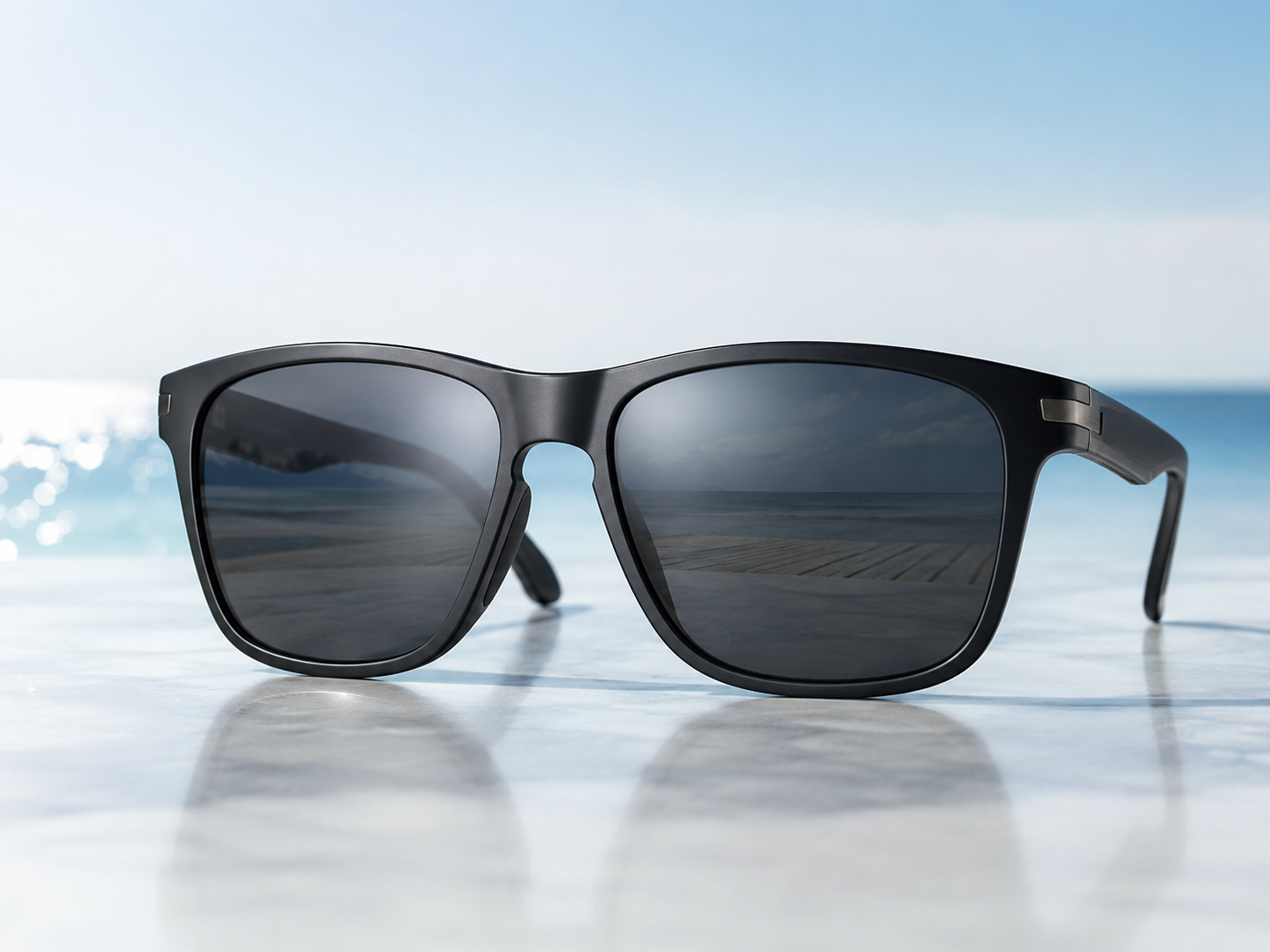
Choose Wraparound Sunglasses or Larger Frames for Better Coverage
Small frames leave more room for sunlight to reach your eyes from the side, top, or bottom. Wraparound sunglasses and larger frames cover more of the eye area. For long walks, beach days, driving, and outdoor sports, frame coverage matters as much as lens tint. If you enjoy running or spending hours outdoors, our guide to the best running sunglasses includes secure fit, UV protection, glare, and prescription lens options.
Pair Sunglasses With a Wide-Brimmed Hat
A wide-brimmed hat or visor adds shade over your eyes and face. Wear both sunglasses and a hat during beach trips, hiking, gardening, outdoor events, and long walks.
Stay in the Shade During Peak Sun Hours
UV rays are stronger around midday. If you plan to be outside for hours, take shade breaks during the brightest part of the day. Use a covered patio, beach umbrella, tree, or canopy when your eyes start to feel tired.
Check the UV Index Before Outdoor Activities
The UV Index gives a daily reading of sun strength in your area. Check it before beach days, sports, yardwork, boating, festivals, and travel.
How Contact Lenses Protect Your Eyes From Sun Damage
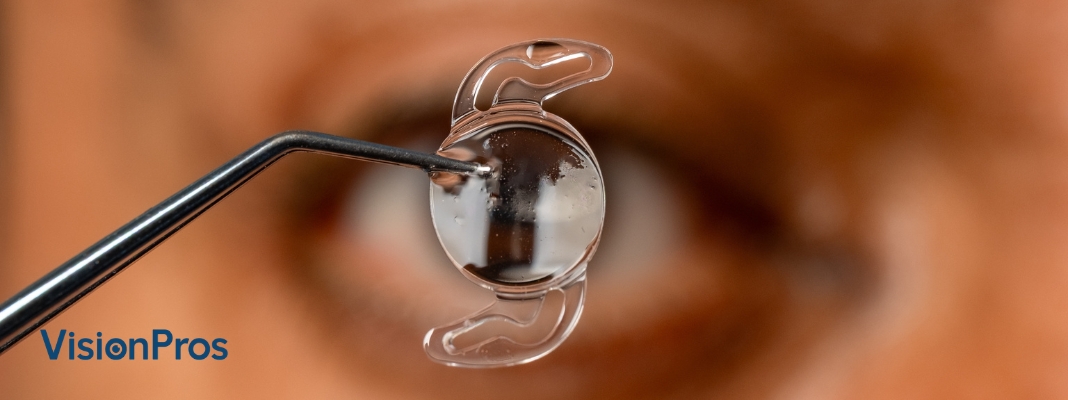
Some contact lenses include UV-blocking materials. These lenses add another layer of protection, but they do not replace sunglasses.
What UV-Blocking Contact Lenses Can Protect
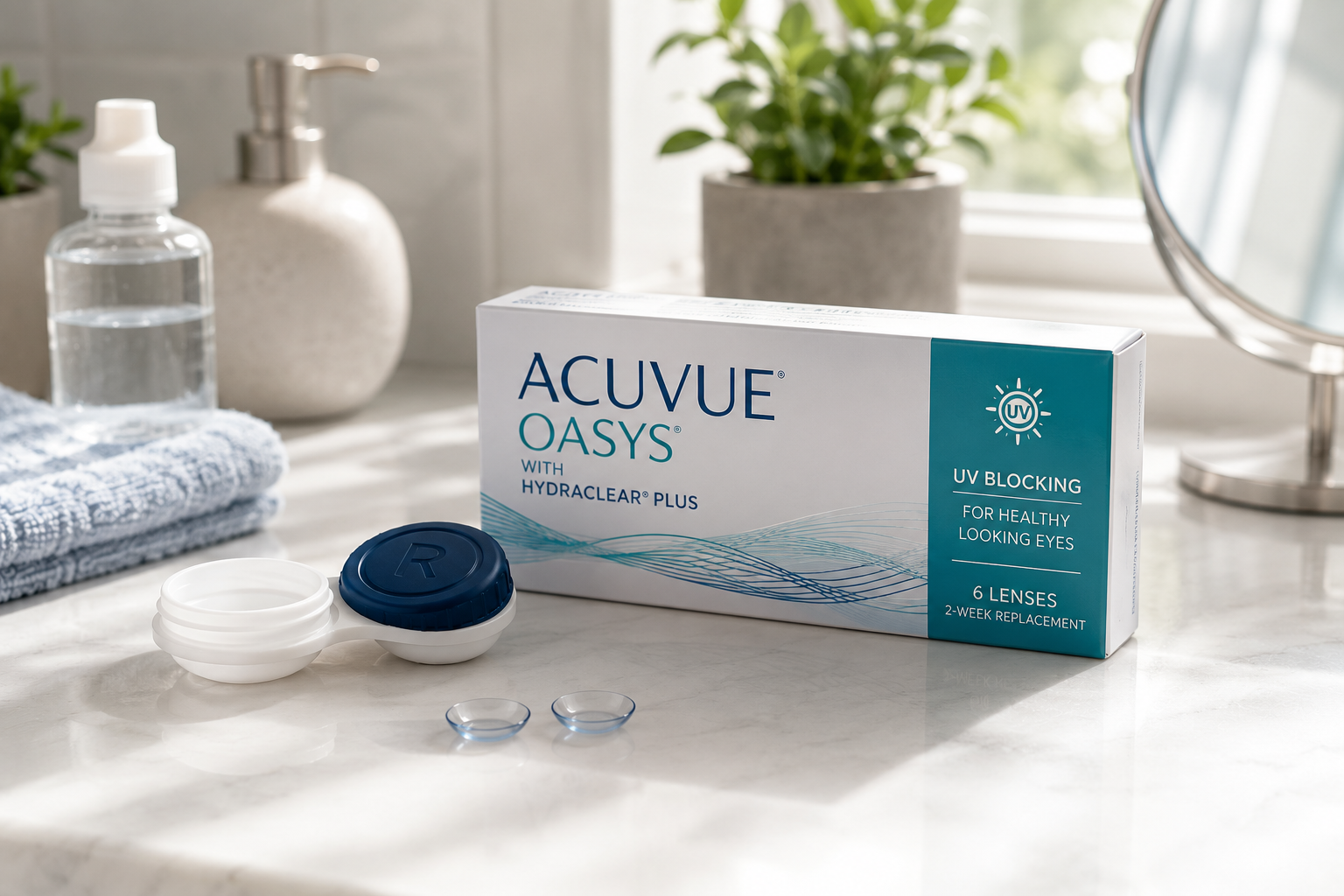
UV-blocking contacts sit directly on the cornea. They help block some UV from reaching the part of the eye covered by the lens. VisionPros carries ACUVUE contacts with built-in UV protection, including ACUVUE OASYS, ACUVUE OASYS MAX 1-Day, and ACUVUE OASYS for Astigmatism. Ask your eye doctor which UV-blocking lens matches your prescription, eye health, and wearing schedule.
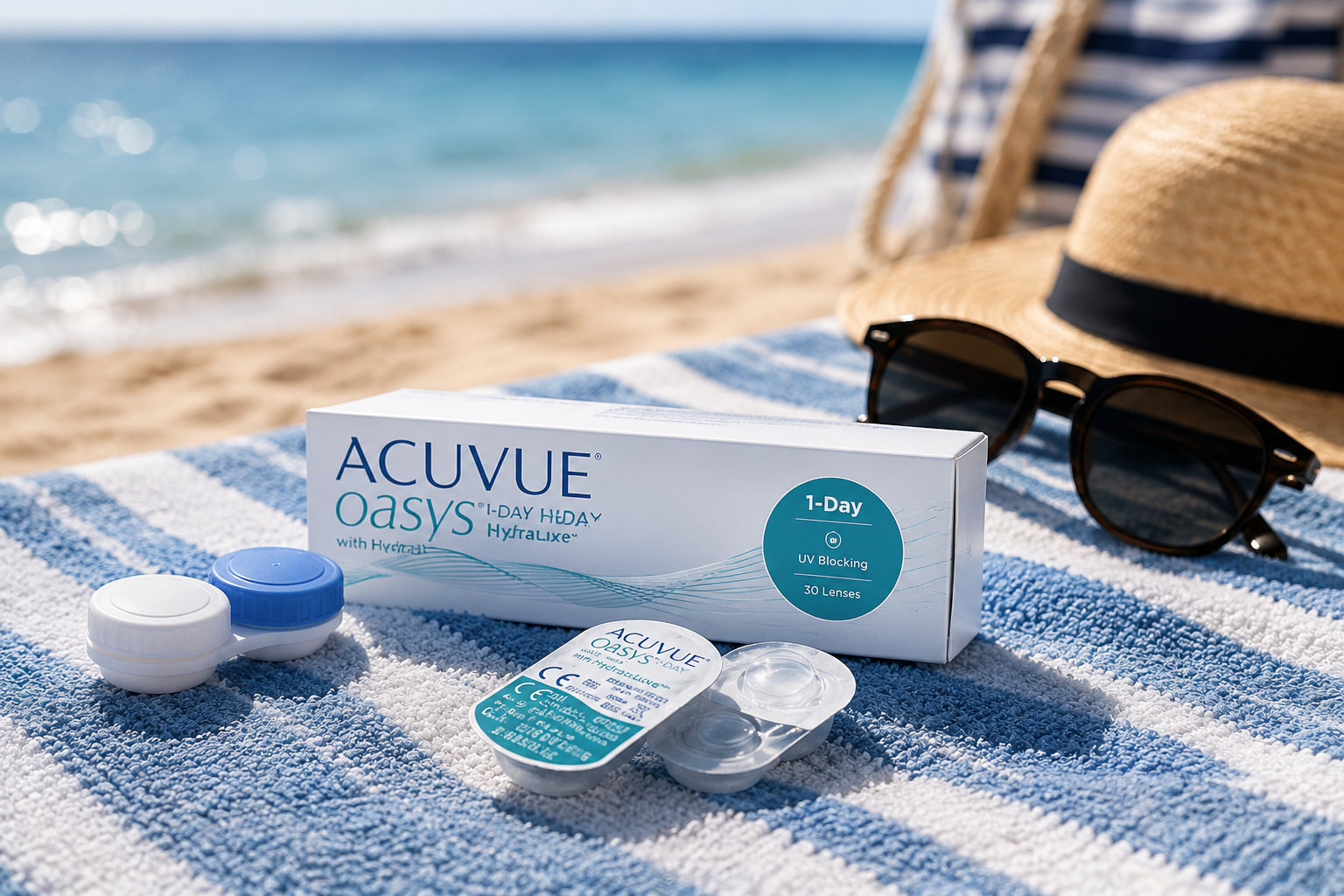
Why Contact Lenses Do Not Replace Sunglasses
Contact lenses cover only part of the eye. They do not cover the whites of the eyes, eyelids, or skin around the eyes. Sunglasses cover more surface area and reduce glare, so they still matter outdoors.
Summer Contact Lens Safety Tips for Heat, Travel, and Outdoor Activities
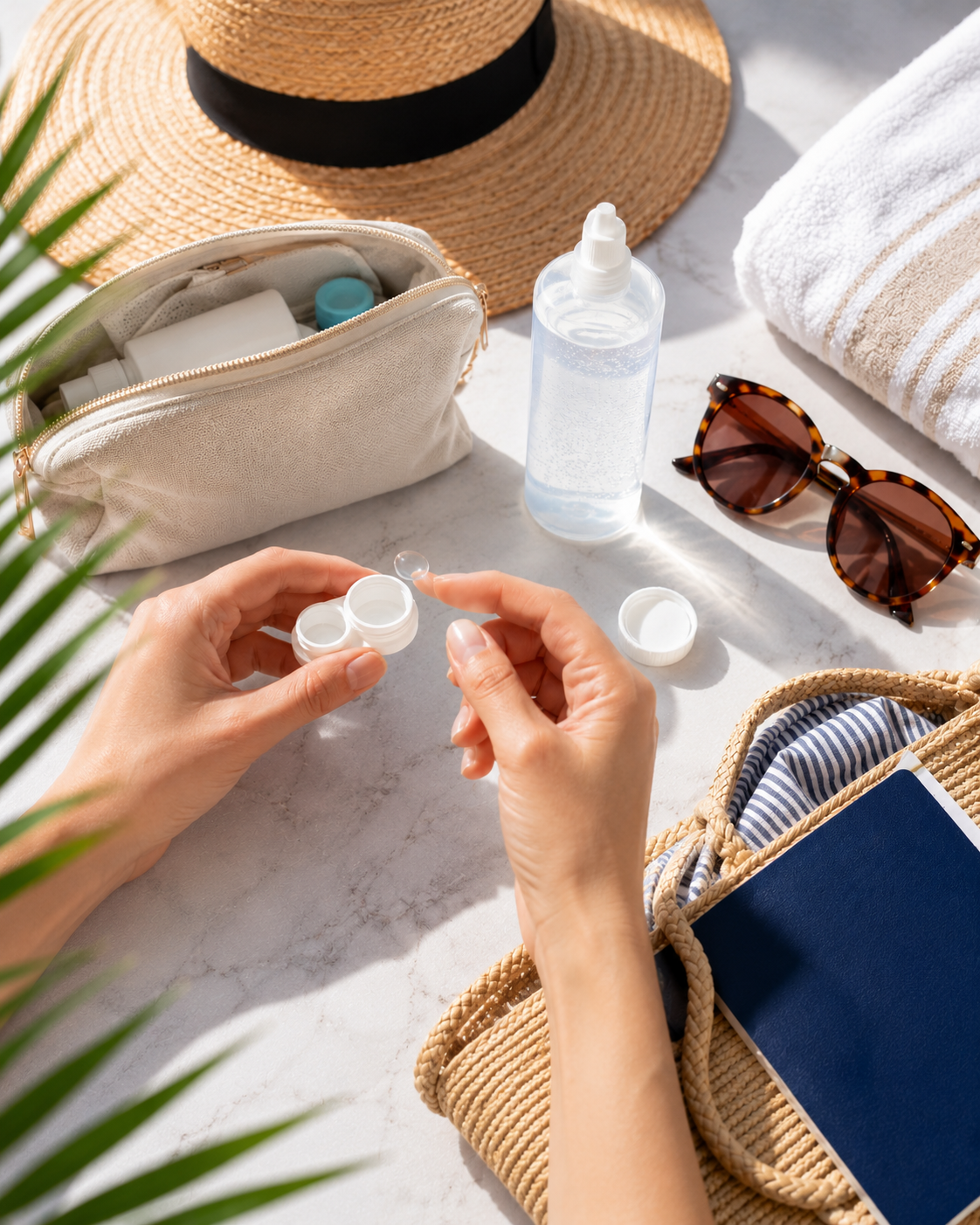
Hot weather, wind, and air conditioning can make contact lenses feel dry. Carry contact lens-safe rewetting drops, a spare pair of lenses, and backup glasses during travel or long outdoor days. Wash and dry your hands before handling lenses, stick to the replacement schedule from your eye doctor, and remove a lens instead of pushing through irritation. For more lens care advice, refer to our tips for summer travel.
Protecting Your Eyes at the Beach, Pool, and Lake
Water and summer eye care need extra attention, especially for contact lens wearers. Pools, lakes, oceans, and hot tubs can expose lenses to germs and irritants.
Wear UV-Blocking Swim Goggles
Swim goggles protect your eyes from splashes, pool chemicals, lake water, ocean water, and glare. Look for goggles with UV protection if you swim outdoors.
Avoid Wearing Contact Lenses While Swimming
Do not swim, shower, or use hot tubs while wearing contact lenses unless your eye doctor gives specific directions. Water can stick to lenses and expose your eyes to germs that can cause serious infections. If your lenses touch pool, lake, ocean, or hot tub water, remove them and follow your eye doctor’s directions. Daily lenses should be replaced with a fresh pair, and reusable lenses need proper cleaning and disinfection before wear.
Watch Out for Glare From Water, Sand, and Pavement
Water, sand, cement, and light pavement reflect sunlight, sending extra brightness toward your eyes. Polarized sunglasses can reduce reflected glare during driving, boating, fishing, and beach days. Check for UV400 or 100% UV protection first.
Protecting Kids’ Eyes From Summer Sun Damage

UV Safety Month is also a good reminder to check children’s sunglasses, hats, and outdoor habits. Kids spend long hours outside during summer, so eye protection should be part of beach days, camp, sports, road trips, and family walks.
Why Children Need Extra UV Protection
Children’s eyes are still developing, and their outdoor time can be high during summer. Choose kids’ sunglasses with 100% UV protection or UV400 first, then focus on comfort and fit.
How to Choose Sunglasses for Kids
Look for lightweight frames, impact-resistant lenses, and a secure fit. Wraparound shapes or larger lenses help block light from the sides. Let kids pick a color or shape they like so they are more willing to wear them. Pair kids’ sunglasses with a brimmed hat, shade breaks, and time away from midday sun. Keep one pair in the car and another in a sports bag, backpack, or beach tote.
Use Hats, Shade, and Breaks From Direct Sun
Pair kids’ sunglasses with a brimmed hat, shade breaks, and time away from midday sun. Keep one pair in the car and another in a sports bag, backpack, or beach tote.
Common Myths About Summer Sun and Eye Protection
Do cloudy days still expose your eyes to UV rays?
Yes. Clouds cut brightness, but UV rays can still cause sun damage to eyes. Wear sunglasses outside on hazy, cool, or overcast days, especially during long outdoor plans.
Does window glass protect your eyes from UV rays?
Yes and no. Car and building windows block a lot of UVB, but UVA can still pass through certain glass. Bright driving conditions can also strain your eyes through glare, so sunglasses are helpful when driving.
Are polarized sunglasses the same as UV protection?
No. Polarized sunglasses reduce glare, while UV-protective sunglasses block UV rays. Some sunglasses can be both. Always check the label for UV400 or 100% UV protection to know which is which.
Summer Eye Protection Checklist
Before You Leave Home 6 items
While You Are Outdoors 6 items
After a Day in the Sun 5 items
FAQs About Summer Sun Damage and Eye Protection
Can your eyes get sunburned?
Yes. Photokeratitis is a sunburn-like injury on the front surface of the eye. It can cause redness, pain, tearing, gritty feeling, blurry vision, and light sensitivity.
How do I know if my sunglasses have proper UV protection?
Check the label. Look for 100% UV protection, 100% UVA and UVB protection, or UV400. Lens darkness alone does not tell you whether sunglasses block UV rays.
Do UV-blocking contact lenses replace sunglasses?
No. UV-blocking contact lenses cover the cornea, not the entire eye area. Sunglasses protect more surface area and reduce glare, so they remain part of summer eye protection.
Is it safe to wear contact lenses while swimming in summer?
No. Swimming with contact lenses raises the risk of eye infection. Use prescription swim goggles or talk to your eye doctor about safer options for water activities.
Should you wear sunglasses on cloudy days?
Yes. UV rays can reach your eyes through clouds. Wear UV-protective sunglasses during outdoor plans even when the sky looks gray.
When should you see an eye doctor after sun exposure?
See an eye doctor if you have eye pain, blurry vision, severe redness, swelling, discharge, or light sensitivity that does not settle. Contact lens wearers should get checked quickly if symptoms start after water exposure.
Protect Your Eyes With the Right Eye Care Habits
UV Safety Month is a helpful seasonal reminder, but summer eye care should continue through beach trips, road trips, outdoor events, and pool days. Wear UV400 sunglasses, add a hat, take shade breaks, and protect your eyes near water.
If you wear contacts, ask your eye doctor about UV-blocking options. For July 4th plans, our Independence Day sale is worth checking before restocking your prescribed lenses.
References
- Benefits of UV Protection and Blocking | ACUVUE®. acuvue.com. Accessed July 1, 2026.
- Eye Health Observances. aao.org. Accessed July 1, 2026.
- Healthy Habits: Keeping Water Away from Contact Lenses. cdc.gov. Accessed July 1, 2026.
- Preventing Eye Infections When Wearing Contacts. cdc.gov. Accessed July 1, 2026.
- Sun Exposure in Travelers. cdc.gov. Accessed July 1, 2026.
- The Sun, UV Light and Your Eyes. aao.org. Accessed July 1, 2026.
- The UV Index. epa.gov. Accessed July 1, 2026.
- Ultraviolet (UV) Protection. aoa.org. Accessed July 1, 2026.
- UV-Blocking Contact Lenses Won’t Protect Your Eyes From UV Damage. aao.org. Accessed July 1, 2026.