








Summer trips are fun until your contact lenses start feeling dry, gritty, or hard to manage in an airport bathroom. Heat, sunscreen, pool water, long flights, and packed travel days can all change how your lenses feel.
These contact lens tips for summer travel can help you pack smarter, keep your eyes comfortable, and avoid common lens problems away from home. Start with a practical contact lens travel kit, then plan for flights, beach days, swimming, showering, heat, humidity, and backup glasses before you leave.
What Should You Pack in a Contact Lens Travel Kit?
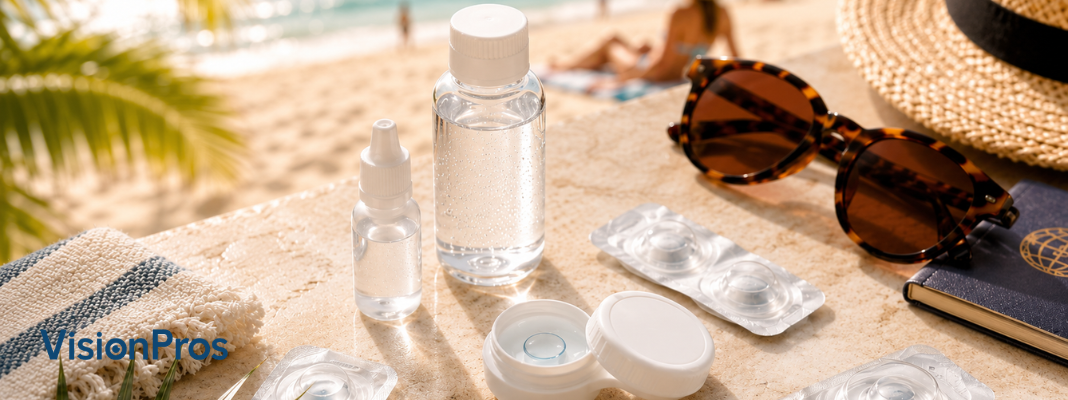
Your contact lens travel kit should stay within reach, not buried in checked luggage. Flights get delayed, bags get gate-checked, and hotel check-in can take longer than planned. Keep your contacts, glasses, drops, lens case, and lens care liquid in your personal bag when you fly.
Eye Care Supplies to Bring With You
Pack more lenses than you expect to wear. A torn lens, lost lens, or extra travel day can happen fast. If you wear daily contacts, bring extra pairs in unopened blister packs. If you wear monthly lenses, pack a clean contact lens case for travel, fresh lens care liquid, and a spare pair if your prescription gives you that option.
VisionPros carries a wide range of daily and reusable contact lenses to suit different needs:
← Drag or swipe to explore →


← Drag or swipe to explore →


Travel Size Contact Lens Solution and Carry-On Rules
A travel-sized contact lens solution bottle is the easiest pick for flights. TSA permits contact lens solution in carry-on and checked bags, though bottles over 3.4 ounces are usually easier to place in checked luggage. If you’re packing contact lenses in carry-on luggage, keep your lens packs, drops, case, and small lens care bottle together in a clear pouch.
Why Backup Glasses and Your Prescription Belong in Your Bag
Backup glasses and a copy of your current prescription also belong in your bag. If your eyes feel irritated, your lenses tear, or your luggage gets delayed, glasses can save the day.
What Should You Know About Flying With Contact Lenses?
Flying with contact lenses can be comfortable, but travel days call for extra care. Cabin air feels dry, screen time goes up, and sleep schedules shift. Pack rewetting drops, backup glasses, a clean case, and lens care liquid in your carry-on.
Can You Wear Contact Lenses on a Plane?
Yes, you can wear contact lenses on a plane. The bigger concern is comfort. Dry cabin air can make lenses feel less comfortable, especially during long flights. Wear glasses if your eyes already feel dry, if you plan to sleep, or if you want a break from lenses. If you keep contacts in, use rewetting drops approved for contact lens wear and keep your lens case nearby.
Why Sleeping in Contacts During Travel Can Be Risky
A quick nap in contacts can feel harmless, but sleeping in lenses raises infection risk unless your eye doctor approved overnight wear. CDC guidance says to remove contacts before sleeping unless an eye care professional gave different instructions.
Are Daily Contacts Better for Summer Travel?
Daily contacts are a strong vacation pick for wearers who want a fresh pair each day with less cleaning at night. You put in a new pair, wear it for the approved schedule, then throw it away before bed.
Daily contacts work well for trips where dust, pollen, sunscreen, or sweat leave lenses feeling less fresh than normal. A new pair the next morning feels easier than stretching reusable lenses through another packed day.
Shoppers with astigmatism or presbyopia can find daily toric and multifocal options at VisionPros:
← Drag or swipe to explore →


Reusable contacts still make sense if that is what your eye doctor prescribed and your care routine already feels comfortable. Pack fresh solution, a clean case, backup glasses, and enough supplies for delays.
What Should You Know About Swimming With Contact Lenses?
Swimming with contact lenses is risky since water can carry germs to your lenses and eyes. Pools, oceans, lakes, hot tubs, showers, and tap water can all create problems for contact lens wearers. If water activities are part of your trip, plan before you swim.
Can You Swim With Contacts?
No, it is safer to remove contacts before swimming. Water can carry germs into the eye, and lenses can trap those germs against the eye surface. If swimming is a big part of your trip, ask your eye doctor about prescription swim goggles. They can help you see more clearly around water without wearing contacts in the pool, lake, ocean, or hot tub.
Can You Wear Contacts in the Pool?
No, it is safer to take contacts out before getting in a pool. Pool water can still carry germs, even when it looks clean. If you accidentally wear contacts in the pool, remove them as soon as you can with clean, dry hands. Daily disposable lenses should be thrown away after water exposure. Reusable lenses should be cleaned and disinfected before wear, based on your care product instructions and your eye doctor’s guidance.
Can You Shower With Contacts?
No, it is safer to remove contacts before showering. Tap water is not sterile, and it should not touch your lenses or lens case. Take your contacts out before you shower, even at a hotel, gym, pool facility, or beach rental. If you forget and shower with contacts in, remove them with clean, dry hands as soon as possible.
What About Contacts at the Beach, Heat, Humidity, and Sand?
Wearing contacts at the beach can be fine if you are lounging, walking, or taking photos, but water exposure is the concern. Keep your lenses away from ocean water, pool water, and splashes. Contact lenses at the beach should also be protected from sand, sunscreen, and sweat.
Summer travel is not only about water. Heat, UV exposure, wind, sand, sweat, and sunscreen can also affect contact lens comfort. Humidity adds another layer, especially in beach towns, tropical destinations, and air-conditioned hotels where humidity impacts contact lenses in different ways throughout the day.
Some contact lenses include UV protection, but they do not cover the whole eye or surrounding skin. Sunglasses with full UV protection are still a smart pick for beaches, hiking trails, theme parks, and long walking tours. Wraparound sunglasses can also help block wind, dust, and sand.
How Do You Keep Contact Lenses Clean While Traveling?
Travel hygiene takes effort. Hotel sinks, airport bathrooms, campground wash stations, beach showers, and public restrooms do not give you the same setup you have at home. Wash your hands with soap and water before handling lenses, then dry them fully with a clean towel or tissue. If the restroom is messy, use glasses until you find a cleaner place.
Tap water is not lens care liquid. Bottled water is not lens care liquid either. Use only the disinfecting liquid recommended for your lenses. Do not top off old solution in your case. Dump old liquid, clean the case as directed, and refill with fresh liquid.
What Should You Do if Your Contacts Feel Uncomfortable While Traveling?
Do not push through contact lens discomfort for the sake of a dinner reservation, museum ticket, or sunset photo. Remove your lenses if you notice pain, unusual redness, blurred vision, swelling, discharge, light sensitivity, burning, itching, excess tearing, or a gritty feeling.
Do not put the same lens back in your eye if symptoms are present. Switch to glasses when your eyes feel dry, irritated, or tired, especially after a flight, beach day, or long outdoor activity.
FAQs About Summer Contact Lens Care
Can You Wear Contact Lenses on a Plane?
Can You Shower With Contacts?
Can You Swim With Contacts?
Can You Wear Contacts in the Pool?
Can I Pack Contact Lenses in Carry-On Luggage?
Is It Safe to Wear Contacts at the Beach?
Get Summer Travel Ready With VisionPros
Summer travel is easier when your contacts, glasses, sunglasses, and eye care supplies are ready before you take out your suitcase. Check your prescription, order enough contact lenses for the full trip, pack backup glasses, and keep your lens care items close during flights and beach days. VisionPros carries daily, monthly, toric, multifocal, and colored contacts from all the top brands.
Shop Contact Lenses at VisionProsDisclaimer: This content is for general information only and is not meant to replace professional medical advice, diagnosis, or treatment.
References
- Contact Lens Risks. https://www.fda.gov/medical-devices/contact-lenses/contact-lens-risks. Accessed May 27, 2026.
- Contact Lens Solution. https://www.tsa.gov/travel/security-screening/whatcanibring/items/contact-lens-solution. Accessed May 27, 2026.
- Environments. https://www.aoa.org/healthy-eyes/vision-and-vision-correction/environments. Accessed May 27, 2026.
- Healthy Habits: Keeping Water Away from Contact Lenses. https://www.cdc.gov/contact-lenses/about/healthy-habits-keeping-water-away-from-contact-lenses.html. Accessed May 27, 2026.
- Preventing Eye Infections When Wearing Contacts. https://www.cdc.gov/contact-lenses/prevention/index.html. Accessed May 27, 2026.
- Shop All Contact Lenses. https://www.visionpros.com/contact-lenses/. Accessed May 27, 2026.