









Fall can be tough on your eyes. Cooler air, ragweed pollen, indoor heating, longer screen sessions, and changes in contact lens comfort can leave eyes itchy, gritty, watery, red, or tired.
Several fall eye conditions share similar signs. Redness can appear with allergies, dry eye, pink eye, or irritation. Watery eyes can point to allergies, dry eye, or viral conjunctivitis. A gritty feeling can come from dryness or contact lens irritation.
In This Guide
Why Eye Symptoms Can Worsen During the Fall Season
Fall brings a different mix of triggers than summer. Outdoor allergens remain active in some areas, while colder air and indoor heating can dry the tear film. School and work routines can also mean longer periods of screen use.
Fall Pollen, Ragweed, and Mold
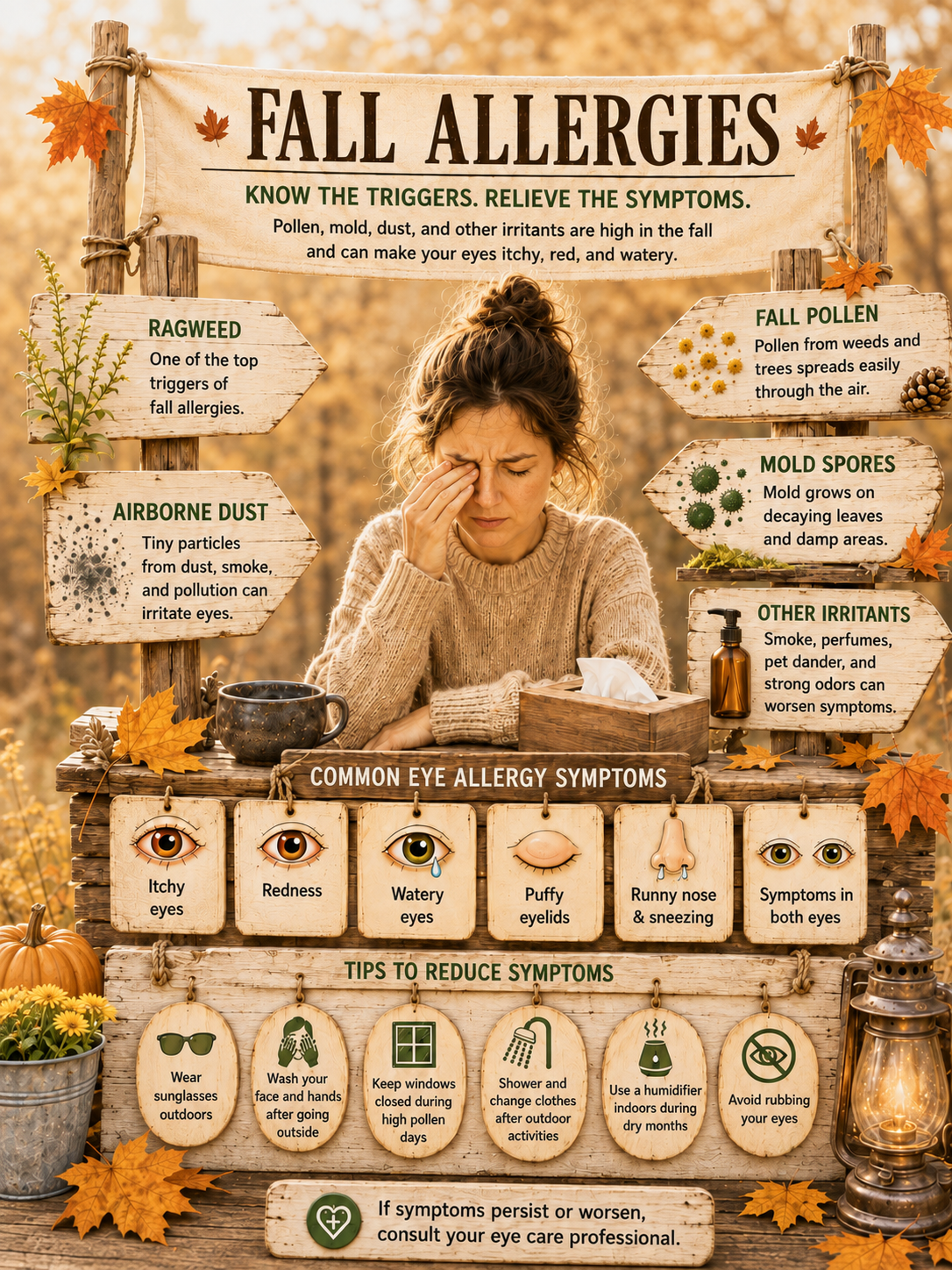
Ragweed is one of the better known fall allergy triggers. Mold spores can also rise around damp leaves, soil, and decaying plant material. Common allergy related eye signs include
- Intense itching
- Redness
- Watery eyes
- Puffy eyelids
- Symptoms in both eyes
- Sneezing or a runny nose
Intense itching is one of the stronger clues that seasonal allergic conjunctivitis is involved.
Cooler Air, Wind, and Indoor Heating
Dry, windy air can make tears evaporate faster. Indoor heating can add to that dryness once temperatures drop.
The eyes can start to burn, sting, or feel sandy. Some people also notice extra tearing. Longer screen sessions can make the discomfort more noticeable since concentrated screen use is linked with less frequent blinking.
Dust, Smoke, and Other Indoor Irritants
Heating vents can stir up dust, while raking leaves can send plant material and mold particles into the air. Bonfires and fireplaces add smoke. These irritants can leave the eyes
- Red
- Watery
- Burning
- Stinging
- Puffy or irritated
Symptoms that continue after the irritant is gone deserve closer attention, especially when pain or vision changes are present.
Contact Lens Wear During Allergy and Dry Eye Season
Seasonal dryness and allergies can change how contact lenses feel. Pollen, proteins, makeup residue, and other deposits can collect on reusable lenses. Dry air and long screen sessions can also make lenses feel uncomfortable earlier in the day.
Redness with worsening pain, light sensitivity, sudden blurry vision, or unusual discharge should not be treated as ordinary seasonal contact lens discomfort.
Common Fall Eye Conditions and Symptoms
Looking at the full symptom pattern is more useful than focusing on one sign.
1 Seasonal Allergic Conjunctivitis
Seasonal allergic conjunctivitis is an allergic reaction involving the conjunctiva. Fall pollen, ragweed, mold, dust mites, and animal dander can trigger symptoms in sensitive people. Watch for
- Intense itching
- Clear, watery eyes
- Redness
- Puffy or swollen eyelids
- Symptoms affecting both eyes
- Nasal allergy symptoms
Allergic conjunctivitis is not contagious. Cool compresses and lubricating drops can ease mild irritation. Allergy eye drops are another option when they fit the person’s eye care and contact lens routine.
2 Dry Eye
Dry eye occurs when the eyes do not make enough tears or when tears evaporate too quickly. Wind, smoke, dry air, indoor heating, air conditioning, and long screen sessions can aggravate symptoms. Common signs include
- Burning or stinging
- A gritty or sandy feeling
- Redness
- Watery eyes
- Intermittent blurry vision
- Light sensitivity
- Contact lens discomfort
Lubricating artificial tears, screen breaks, full blinking, and less direct airflow from fans or vents can reduce mild dryness.
3 Viral Conjunctivitis
Viral conjunctivitis is a common form of pink eye. Adenoviruses are a frequent cause, and symptoms can appear alongside a cold or respiratory infection. The eye usually looks pink or red and produces watery discharge.
Viral conjunctivitis frequently starts in one eye and later affects the other. The eye can also feel irritated or gritty. Since viral pink eye is contagious, hand washing matters. Towels, pillowcases, eye makeup, and contact lens items should not be shared.
4 Bacterial Conjunctivitis
Bacterial conjunctivitis is another form of pink eye. Thick yellow or green discharge is more typical than the watery discharge linked with viral conjunctivitis. Other signs include
- Redness
- Puffy eyelids
- Sticky lashes
- Eyelids stuck together after sleep
- Thick discharge
Viral and bacterial pink eye can look alike, so symptoms alone do not confirm the cause. Contact lens wearers with thick discharge, pain, or marked redness should remove their lenses and contact an eye doctor.
5 Digital Eye Strain
Digital eye strain is linked with prolonged use of computers, phones, tablets, and other screens. Symptoms can include tired eyes, dryness, blurry vision, headaches, and trouble focusing after long periods of near work.
The 20-20-20 rule is a simple reminder. Every 20 minutes, look at something around 20 feet away for about 20 seconds. Full blinking and a comfortable viewing distance can also ease strain.
6 Contact Lens Related Eye Irritation and Infection
Contact lens discomfort can come from dryness, deposits, poor lens care, overwear, or an eye problem unrelated to the lens itself. Mild irritation can feel scratchy or gritty. Allergy symptoms can make lenses feel coated or uncomfortable. Serious warning signs include
- Worsening eye pain
- Strong redness
- Light sensitivity
- Sudden blurry vision
- Heavy tearing
- Unusual discharge
These symptoms can occur with microbial keratitis, a serious corneal infection linked with contact lens wear. Remove the lenses and contact an eye doctor promptly if these signs appear.
7 Irritant Conjunctivitis
Irritant conjunctivitis happens when the eye reacts to smoke, dust, fumes, chemicals, pool water, or foreign material. Symptoms can include redness, watering, mucus, burning, or stinging.
Moving away from the irritant and avoiding eye rubbing can ease mild discomfort. Chemical splashes need immediate flushing with clean water and urgent medical guidance. Ongoing pain or vision changes also need prompt care.
Fall Eye Allergies vs Dry Eye
Fall eye allergies and dry eye can look similar. Both can cause redness, watering, burning, and irritation. The strongest symptom and the trigger can help separate the patterns.
Points Toward Fall Eye Allergies
- Strong itching
- Clear watery tears
- Puffy eyelids
- Symptoms in both eyes
- Sneezing or nasal irritation
- Flare ups around ragweed, mold, or dust
Points Toward Dry Eye
- Burning or stinging
- Gritty or sandy eyes
- Intermittent blurry vision
- Tired eyes
- Discomfort after screen use
- Worse in wind, dry air, or heating
Shared by Both
- Redness
- Watering
- Burning
- Irritation
- Contact lens discomfort
- Temporary blurry vision
This overlap is why comparing symptoms, triggers, and habits works better than relying on a single sign. Use our interactive symptom checker to compare your symptoms, triggers, and eye habits with various fall eye conditions to find a possible match.