









The Unseeing Village: An Interactive Story

The stone door opens with a deep rumble, and blue light spills across the floor. Inside, shelves rise from floor to ceiling, filled with sealed cases, labeled boxes, and fitting records.
There is no gold.
The treasure is a collection of contact lenses.
Some shelves hold spherical lenses for standard correction. Others contain toric lenses for astigmatism or multifocal lenses for near and far vision. Each box lists its product name, manufacturer, prescription range, and replacement schedule. Ledgers beside the shelves track quantities, package condition, and household fittings.
A message glows across the back wall:
“Each eye must receive what belongs to it. Careless hands turn clear sight into sorrow.”
You think of the blacksmith, librarian, and cartographer waiting in Maculara. Their sight changed differently, so one lens cannot suit them all. The cleric must examine each villager, select the prescribed lens, and keep the product details together for future orders.
The treasure has been found. Now you must decide how to bring clearer sight home without causing harm.
What will you do first?
You open a large ledger beside the first shelf. Its pages list product names, manufacturers, spherical, toric, and multifocal designs, along with daily disposable and reusable schedules.
Other columns track box quantities, shelf locations, package condition, and household fittings. These records will help the cleric locate the prescribed lens and create a useful reference for later orders.
Which section will you inspect?
You send a messenger through the safest road. The cleric reaches the treasure with two assistants and Maculara’s vision records.
She studies the shelves and confirms that the stock includes separate powers, curves, materials, and lens designs. Once a fitting is approved, the exact product name, prescription details, quantity, and replacement schedule must be written on the villager’s record.
Where will you help first?
You decide that the sealed stock should move only after Maculara has a clean place for examinations, fittings, teaching, and recordkeeping.
The town hall needs separate areas for unopened boxes, approved fittings, household records, and pickup. Transport routes and home visits also need written counts so no package reaches the wrong villager.
Where will you begin?
Three marks appear throughout the treasure. A circle identifies standard correction. A crossed oval marks toric lenses. Three linked rings mark multifocal lenses.
How will you organize them?
Most boxes remain clean and sealed. A few sit near a damp wall. Others have torn corners or faded labels.
What will you inspect first?
A locked drawer bears the village crest. Inside are blank fitting cards and family names from centuries ago.
A note rests on top: “A name is not a prescription. An eye must be seen as it is today.”
Which record will you inspect?
The cleric separates the stock into lens design, replacement schedule, and urgency for examination.
Which part will you review with her?
A clean stone table stands near the entrance. The cleric asks for bright light, water, soap, dry cloths, and record cards.
Which area will you prepare?
Behind the shelves, illustrated panels show lens insertion, removal, cleaning, storage, and disposal. Stone tablets warn against shared lenses, dirty water, damaged packages, and unapproved overnight wear.
Which set will you prepare first?
Tables fill the center room. Side rooms become examination, teaching, and storage areas.
Which room will you prepare first?
The fastest route crosses rough ground. Each case must stay sealed, dry, and tied to the inventory.
How will you organize the move?
Several villagers are elderly, injured, or caring for young children. The cleric plans home visits after the main station opens.
Which task will you take?
You clear three tables and move sealed boxes into labeled groups. Some packages carry details that do not fit neatly into one pile.
How will you finish the task?
The cleric’s notes describe distant blur, warped lines, and trouble shifting focus between near and far. The symbols in the treasure appear beside matching lens categories.
How will you use the match?
The notes state that lens power, curve, diameter, material, and design must suit the wearer’s eyes and prescription. Other pages warn against sharing and careless handling.
Which part will you copy?
You place every torn, opened, or damp box in a marked area for cleric review. The usable stock remains sealed.
How will you record the split?
A cool draft enters through a split in the stone. Droplets collect beneath one shelf.
What will you do?
Some boxes call for a fresh pair each day. Others follow a reusable schedule with cleaning and storage directions.
How will you sort them?
Several surnames still appear in Maculara. Their old entries list separate lens powers and designs, even among relatives.
How will you treat the records?
Each card has spaces for lens power, curve, diameter, design, schedule, and follow-up remarks.
What will you add?
The sentence on the note is repeated on the back wall in smaller letters. A drawer beneath it holds care instructions.
What will you do with the rule?
The cleric explains that each design serves a separate prescription need. Her assistants begin labeling the shelves.
How will you assist?
The cleric separates fresh daily pairs from lenses that require cleaning, storage, and timed replacement.
How will you prepare for teaching?
The cleric names people whose blurred sight has made work or home care unsafe. The crowd begins pressing toward the tables.
How will you organize the first group?
You carry clean water from a sealed cistern and place soap beside fresh cloths.
How will you manage the station?
You place lamps at measured distances and hang letters, lines, and shapes on the wall.
How will you complete it?
Fear has followed the villagers for days. A calm corner keeps the examination area from becoming crowded.
How will you care for the waiting group?
The drawings show clean hands, one lens at a time, and correct case care.
How will you finish the posters?
The tablets list risks tied to sharing, dirty hands, damaged packages, and sleeping in lenses without professional direction.
How will you display them?
Inside are clean lens cases, sealed care items, and blank follow-up cards.
Which item will you inspect?
You scrub the tables, set out clean water, and place dry cloths beside the basins.
How will you arrange the space?
The desk holds village names, appointment times, prescription details, lens type, and follow-up remarks.
What will you add?
Chairs face a large table where the cleric can demonstrate lens handling.
How will you prepare it?
The case is heavy, and the mist has spread across part of the return road.
How will you bring it home?
You group boxes by shelf section, then wrap each group against damp air and dirt.
How will you mark them?
Forest workers, tower keepers, and river workers volunteer. Each knows one road well.
How will you divide the work?
You record each address, household need, and safe visiting time.
How will you arrange the list?
Families speak of cooking fires, medicine labels, steep steps, and child care made harder by blur.
How will you use the reports?
The Blindness covers two streets and part of the river bridge. A longer road stays clear. A narrow passage behind the bakery looks usable.
Which route will you choose?
You create a fresh inventory and record the exact details printed on every sealed box. Each entry lists the product name, manufacturer, lens design, power range, replacement schedule, pack quantity, package condition, and shelf location.
The cleric compares your work with the original treasure ledger. Both counts match, and no package appears in the wrong section. After each fitting, the assigned lens and quantity are copied onto the household record so the same details can guide a future order.
You place Maculara’s household records beside the related lens sections without assigning a lens to anyone. Reports of distant blur, distorted lines, and trouble with near and far focus sit near the categories the cleric will inspect.
The arrangement keeps the records close while preserving the need for individual examinations. The cleric checks each villager’s current prescription and eye measurements before consulting the nearby shelf.
You move every unclear record to a table marked with blue cloth. Some villagers describe mixed symptoms, while several cards lack enough detail for a possible category.
The cleric agrees that these cases deserve longer appointments. No box from the blue table is opened until she checks the wearer’s eyes, prescription, comfort needs, and eye health.
You place each symptom group near a possible lens category, treating the pairing as a question rather than a final match. Reports of warped lines rest near the toric records, while near-and-far complaints sit near the multifocal section.
The cleric reviews the groups and reminds everyone that symptoms alone cannot select a contact lens. The records guide her attention, but the examination and prescription decide what the wearer receives.
You tie blue ribbon around every household record that does not fit neatly into one group. Some villagers report more than one change, while others mention redness, discomfort, or sudden blur.
Those records move into a separate examination line. The cleric can spend more time with these villagers without rushing them through the regular fitting area.
You write questions about lens power, curve, diameter, material, and design instead of interpreting unfamiliar measurements yourself. The list grows as you compare the old treasure notes with Maculara’s records.
The cleric answers each question before fittings begin. Her assistants repeat the differences in their own words, and she corrects any mistaken ideas before a package reaches the examination table.
You rewrite the treasure notes in language Maculara’s families can follow. Technical measurements remain on the fitting records, while the public cards focus on clean hands, personal prescriptions, replacement timing, and signs that call for professional care.
The cleric reads each card and revises two unclear lines. The finished copies are placed near the waiting area, where families can study them before their appointments.
You mark every warning about shared lenses, shared cases, and mixed-up packages. The same rule appears throughout the old records: a contact lens belongs to the wearer whose eyes and prescription were checked during fitting.
Copies of the warning are placed beside the examination tables and storage shelves. Villagers learn that the treasure is meant for individual use, not trading between relatives or friends.
You search the treasure records for drawings that show lens handling. Inside a narrow drawer, you uncover illustrated panels for handwashing, insertion, removal, case cleaning, disposal, and storage.
The cleric checks the sequence and adds notes beside the drawings. The panels later become teaching posters at the Maculara town hall, where new wearers can study each action before practicing.
You count every intact, sealed box once, record the total, then repeat the count from the opposite side of the chamber. The second number matches the first.
The cleric signs the completed inventory beside your name. The transport teams now know how much usable stock entered their care and how much should arrive in Maculara.
You gather the transport team and explain that torn, opened, damp, or unreadable packages must stay apart from usable stock. No porter is permitted to repair a damaged box or hide it inside a sealed bundle.
During packing, one crushed corner is spotted beneath an outer wrapper. The box is returned to the inspection table, and the team sees the rule put into practice.
You follow the damp marks across the wall and locate a cracked stone channel above the storage shelf. Water has traveled through the split and collected behind several old crates.
While clearing the area, you uncover a narrow doorway concealed by the shelving. The hidden room beyond it is dry and contains several intact cases along with an older inventory ledger.
You move every sealed package away from the damp wall and into the dry center chamber. Boxes are raised above the floor on wooden platforms, with space between each group.
The cleric can inspect the labels without reaching through crowded shelves. Porters also gain a dry, open area where bundles can be wrapped and checked before departure.
You press waxed cloth into the wall split, then pack stone dust around the edges. The dripping slows, and the floor begins to dry.
A mason from Maculara later strengthens the repair with fresh mortar. The chamber can store sealed stock without placing it beside dripping stone or standing water.
You hold a candle near the crack and watch the flame bend toward a steady draft. The split connects to a narrow passage behind the storage shelves.
The passage ends at a hillside opening closer to Maculara than the main stone door. After the cleric inspects it, the route is marked for records, empty cases, and smaller sealed loads.
You move daily disposable lenses to one side of the chamber and reusable lenses to the other. Each section receives its own handling notes, replacement information, and fitting records.
The cleric can now teach separate routines without mixing the instructions. Villagers receiving a fresh pair each day hear a different lesson from those fitted with reusable lenses.
You copy every replacement schedule onto a large card and place it beside the related stock. Each card includes spaces for the first day of wear, the number of boxes issued, and the date when the household should check its remaining supply.
The cleric checks each card before it leaves the chamber. At the town hall, every wearer receives directions tied to the exact prescribed lens, along with a written reminder for the next supply check.
You read the old records explaining why replacement schedules differ. The notes describe separate materials, designs, wear patterns, and care routines.
You copy the passage for the cleric’s assistants. They stop speaking about every contact lens as though it follows one common schedule and begin checking the record tied to each fitted lens.
You compare the old family names with Maculara’s current records, but you keep the historical cards apart from present prescriptions. The records show what earlier residents wore, not what their descendants need now.
The cleric begins every examination with the current state of the wearer’s eyes. No villager receives lenses from a relative’s record or an ancestor’s measurements.
You invite families to view the old fitting cards while they wait. Several recognize household marks, handwriting, and names connected to grandparents or distant relatives.
The records bring comfort to families who feared Maculara had never faced vision trouble before. The cleric reminds them that the cards belong to village history, not current lens selection.
You compare fitting records across several generations of the same families. Even close relatives show separate powers, curves, designs, and replacement schedules.
The pattern becomes part of the cleric’s teaching talk. Family resemblance does not mean identical eyes, and one person’s contact lenses cannot pass safely to a parent, sibling, or child.
You assign a number to every new fitting card, then place the same number on the related sealed box after the cleric approves it. A second clerk checks both before the package leaves the table.
The household record keeps the exact product name, prescription details, quantity, replacement schedule, and follow-up date together. When another supply is needed, the family has a written reference rather than trying to remember the box or lens name.
You add spaces for comfort, clarity at different distances, movement on the eye, redness, and follow-up notes. The cleric completes these fields during the fitting and after the wearer practices insertion.
A lens that feels uncomfortable or fails to sharpen sight does not move directly to distribution. The cleric records the concern and examines another prescribed option.
You place a no-sharing warning at the top of every fitting card. The wearer and any assisting family member read it before the package is handed over.
The message becomes familiar across Maculara. Contact lenses, lens cases, and opened care items belong to one wearer and should not pass between households.
You hang the treasure keeper’s rule above the fitting tables:
“A name is not a prescription. An eye must be seen as it is today.”
The sentence quiets families who arrive carrying old records from relatives. It keeps the fitting work centered on current examinations rather than inherited cards or guesses.
You read the rule aloud to every porter and assistant before the cases leave the treasure chamber. They agree that no package will be opened on the road, at a household door, or inside the storage room.
When villagers gather around the first shipment, the transport team keeps the boxes sealed and directs everyone to the cleric’s appointment desk.
You open the drawer beneath the keeper’s rule and uncover care sheets covering clean hands, water exposure, insertion, removal, storage, replacement timing, and warning signs.
The cleric reviews the pages and selects those tied to the lenses in the treasure. Copies are prepared for fitting tables, teaching rooms, and home visits.
You rewrite the lens-section labels in larger letters and add simple symbols beneath them. A circle marks spherical lenses, a crossed oval marks toric lenses, and linked rings mark multifocal lenses.
The larger signs help assistants move between shelves without confusing the sections. Villagers with reduced sight can also read the headings at close range.
You place blank record cards beside each lens section and arrange them in numbered trays. When the cleric completes an examination, the card moves with her to the related shelf.
Loose papers no longer drift near the wrong boxes. The trays create a visible path from examination to fitting, package check, and final instruction.
You ask the cleric to explain spherical, toric, and multifocal designs before fitting begins. She uses diagrams from the treasure records and links each design to the prescription details it addresses.
Her assistants repeat the distinctions in their own words. The cleric corrects mistaken ideas before the first package is opened.
You prepare one instruction card for daily disposable wear and another for reusable wear. Each card covers handling, replacement, disposal, storage, and the number of boxes issued.
A second section asks households to check their remaining supply before the final box is opened. The cleric places the correct card with every approved fitting record, giving each wearer a clear point for the next order.
You gather clean cases from the hidden drawer and place them beside the reusable-lens section. Each case stays closed until the cleric confirms the selected lens and teaches the storage routine.
Daily disposable wearers do not receive unnecessary cases. Reusable-lens wearers leave with a clean case and the related care directions.
You ask the cleric how daily routine enters the fitting decision. She speaks with each villager about work, hand control, cleaning ability, wearing time, and access to clean storage.
The discussion does not replace the prescription or eye examination. It gives the cleric extra context when reviewing clinically suitable lens choices.
You place caregivers, bridge workers, mill operators, and residents with urgent safety duties near the front of the appointment area. The cleric still checks medical urgency before setting the final order.
The villagers accept the arrangement after hearing the reason. Residents whose blur places other people at immediate risk receive prompt evaluation.
You replace the crowd with a numbered appointment list. Each villager receives a time window and a place to wait away from the fitting tables.
The room becomes quieter, and the cleric can focus on one examination at a time. Families use the waiting period to study care posters and write questions.
You hand the full list to the cleric and ask her to decide the examination order. She reviews sudden sight changes, pain, redness, work hazards, caregiving duties, and other health concerns.
Several villagers move out of the contact lens line for closer medical care. The treasure distribution remains separate from cases that call for treatment before fitting.
You hang hand-cleaning directions above the basin in large lettering with illustrated steps. The signs show washing with soap, thorough rinsing, and drying with a clean cloth before touching a lens.
The cleric demonstrates the routine at the start of each group session. New wearers repeat it before practicing insertion or removal.
You assign one assistant to refill the clean-water container and replace used cloths after each group. Empty basins are cleaned before fresh water is poured.
The handwashing area stays orderly throughout the day. Families do not dip into shared standing water or reuse damp towels left by earlier visitors.
You stand beside villagers who cannot read the signs clearly and speak through each hand-cleaning action. Large symbols on the wall give them another reference point.
Nobody is hurried through the lesson. Each wearer demonstrates the routine before moving to the lens-handling table.
You measure the viewing distance from the chair to the wall chart, then check it again from the opposite direction. The floor is marked so chairs return to the same position after each examination.
The cleric receives consistent viewing conditions from one villager to the next. Changes in the result are less likely to come from a chair moved closer to the chart.
You ask the cartographer to draw bold shapes for villagers who cannot read letters. He creates circles, lines, houses, tools, and directional symbols in several sizes.
The cleric uses the shapes during distance and clarity checks. Children and nonreaders can describe what they see without guessing at unfamiliar letters.
You record what each villager sees before fitting, then repeat the same tasks after the prescribed lens is placed and settled. The cleric compares distance, near work, line clarity, and comfort.
When a result falls short, the lens is removed and the fitting record is reviewed. A sharper chart alone does not outweigh poor comfort, redness, or an unsuitable fit.
You sit with frightened families and answer the questions covered in the cleric’s public instructions. You explain the appointment order, the need for individual prescriptions, and the reason boxes remain sealed.
Questions about pain, sudden loss of sight, or other warning signs go directly to the cleric. The waiting corner stays calm without turning into an informal diagnosis table.
You number the waiting cards and call one household at a time. The matching number appears on the examination form, fitting card, and approved package.
Families can step outside for air without losing their place. The examination entrance stays open rather than blocked by a crowd pressing toward the door.
You collect questions on small cards and group them by topic. The largest groups concern sharing lenses, water exposure, replacement timing, sleep, and discomfort.
The cleric answers them during a teaching session before distribution begins. Her replies are copied onto posters for later appointments and home visits.
You redraw the handling pictures at a larger scale and place one short caption beneath each image. The sequence starts with clean hands, then moves through inspection, insertion, removal, disposal, or storage.
Villagers can follow the images from across the teaching room. The cleric keeps the wording direct so each caption matches the action shown above it.
You number every care picture and arrange the posters from left to right. Arrows guide the reader from handwashing to the last step in the routine.
During teaching, the cleric can point to the number that matches the action being practiced. Wearers who forget a step know where to look without scanning the whole wall.
You ask the cleric to inspect each poster before it is copied. She corrects a hand position, rewrites the case-cleaning note, and removes a drawing that could be mistaken for rinsing lenses with ordinary water.
The final posters reflect the care directions tied to the treasure stock. No image remains merely for decoration if it risks teaching the wrong action.
You place warning cards beside every fitting and handling table. Each card covers shared lenses, dirty hands, damaged packages, water exposure, unapproved sleep, and ignored discomfort.
The warnings appear before the wearer opens a package or practices insertion. Families see the same rules at every stage of the appointment.
You ask the cleric to explain each warning aloud rather than leaving the tablets as silent rules. She describes how germs, poor fit, damaged packaging, and improper wear can harm the eyes.
Villagers begin asking more specific questions. The session turns a list of prohibitions into practical actions they can remember at home.
You place each warning beside the care picture connected to it. The no-water warning sits near cleaning and storage, while the no-sharing warning rests beside the fitting and package panels.
The arrangement links each risk to a real action. Wearers can see where a mistake enters the routine and what they should do instead.
You count the clean lens cases and match them with the reusable-lens inventory. Each case receives a number that links it to the approved fitting card.
The cleric checks the case before it reaches the wearer. Cases do not move into the daily disposable section or into households with no reusable-lens fitting.
You read the follow-up cards and note questions about comfort, redness, pain, discharge, light sensitivity, and sudden sight changes. Other fields ask whether the wearer can insert and remove the lenses safely.
You add spaces for the exact lens name, boxes remaining, and the date of the next supply check. The cleric uses the visit to confirm that the lens remains suitable before the household seeks another supply.
You hand the follow-up cards to the cleric and ask her to revise them for Maculara. She adds instructions to remove the lenses and seek professional care when pain, marked redness, light sensitivity, discharge, or sudden vision change occurs.
Each wearer receives a copy with the appointment record. Families know which concerns belong in a routine follow-up and which call for quicker attention.
You place unopened boxes on raised tables across the room from basins, buckets, and damp cloths. A marked line on the floor separates storage from handwashing.
Porters carry the cases straight to the dry side of the room. Water used for cleaning hands never passes over or beside the sealed stock.
You assign one cleaner to each handling table. After a wearer finishes practice, the cleaner removes used cloths, checks the surface, and prepares the area for the next appointment.
The cleric can focus on fitting and instruction instead of watching every table at once. Each station begins the next session clean and uncluttered.
You place trained assistants beside villagers with hand tremors, limited movement, or trouble seeing their own fingers clearly. The assistants guide the practice without taking control away from the wearer.
The cleric checks whether the wearer can handle the prescribed lens at home. When extra assistance is needed, a caregiver joins the lesson and practices the same routine.
You give each villager a numbered card that matches the examination record and approved package. The number follows the record from check-in to fitting, instruction, and follow-up.
Names alone no longer carry the full burden of identification. Similar names and large families are less likely to leave with switched records.
You add fields for the product name, lens power, base curve, diameter, design, manufacturer, replacement schedule, quantity issued, and follow-up date. The cleric completes them after examination and fitting.
Assistants compare each box with the written record before handing it to the wearer. A separate line records how many boxes remain at the town hall, keeping household orders and village stock from becoming mixed.
You add a section where parents, relatives, and caregivers can write questions before the appointment. The topics range from insertion assistance to storage, school routines, work conditions, and missed replacement dates.
The cleric reviews the questions with the whole household. Everyone involved in the wearer’s routine hears the same directions.
You place large mirrors along the teaching table with space between each seat. New wearers can watch their hands and eyes without leaning across another person’s practice area.
The cleric adjusts the mirror height for children and seated villagers. Each wearer has enough room to work slowly and stop when uncertain.
You hang the care posters in the order a wearer follows at home. The wall begins with handwashing and package inspection, then moves to insertion, removal, disposal, or storage.
The teaching room now mirrors the routine itself. Wearers can look from one panel to the next without jumping between unrelated instructions.
You prepare questions about water, sleeping in lenses, shared cases, missed replacement dates, damaged packaging, and discomfort. The cleric uses them as prompts during the teaching session.
Families hear answers before common mistakes happen at home. The questions also reveal which instructions need another demonstration.
You carry the first case along the shortest marked route while the mist begins crossing the road behind you. Scouts keep watch at each turn, and a second porter follows with the inventory.
The case reaches Maculara before dusk. The cleric checks the seals and shelf numbers before it enters the town hall storage room.
A porter slips on loose stone and drops to one knee. You set down your own load, inspect the fallen case, and help the porter reach a stable part of the path.
The seals remain intact, though one outer rope has loosened. The team repairs the binding and arrives together rather than leaving an injured person behind.
At every rest point, you compare the seals, rope ties, and inventory numbers with the departure record. One damp outer cloth is replaced before moisture reaches the box beneath it.
The repeated checks slow the group, but every case arrives dry, sealed, and recorded. The cleric signs each bundle into the Maculara storage room.
You assign an inventory number to every waxed bundle and copy it onto the transport ledger. The number identifies the treasure shelf, product name, lens category, pack quantity, and destination station.
When the bundles reach Maculara, assistants compare the received count with the departure record before moving anything into storage. Every package can be traced from the treasure chamber to the fitting table and household record.
You tie every bundle with a double knot and tuck the loose ends beneath the wrapping. Porters test the bindings by lifting each case a few inches before departure.
No bundle shifts during the climb or river crossing. At the town hall, the knots are opened only after the inventory and package seals are checked.
You mark the stock needed for the earliest examinations with blue thread. The thread sits around the waxed outer wrapping, not around the contact lens boxes themselves.
The cleric can locate the first-needed bundles without disturbing the rest of the shipment. The blue mark affects handling order, not the medical order for villagers.
You divide the sealed stock across the forest, tower, and river teams. Each group carries a separate inventory, while duplicates and related records travel on different routes where practical.
A blocked trail delays only one part of the shipment. The other teams still reach Maculara with enough records and sealed stock for the cleric to begin organized examinations.
You send scouts along each route before the porters depart. They check fallen trees, loose tower stones, rising water, and fresh patches of mist.
Their signals guide the teams away from sudden hazards. Porters wait at marked points until the road ahead is reported open.
You pair each porter with a forest worker, tower keeper, or river guide who knows the chosen route. The guide watches the ground and direction while the porter protects the sealed case.
Nobody carries a load through unfamiliar terrain alone. When the path divides or visibility drops, each pair stays together and follows the agreed markers toward Maculara.
You group nearby homes into one visit route, placing families from the same street together. The cleric spends less time crossing the village and reaches several households before sunset.
Neighbors begin watching for one another while they wait. One household keeps water warm for handwashing, while another clears a quiet room for the examination.
You review every name with a village elder who knows the outer farms and hillside cottages. She notices two residents missing from the first list, including an older man who lives beyond the orchard and rarely visits the square.
Their homes are added before the cleric leaves. No resident disappears from the village records simply due to distance or isolation.
You add a section where caregivers can write questions about insertion, removal, cleaning, storage, replacement, and future orders. Parents, relatives, and neighbors begin filling the cards before the cleric arrives.
During each visit, the cleric speaks with the wearer and the person assisting them. The household keeps a record of the exact prescribed lens, quantity issued, replacement schedule, and next supply check.
You ask the cleric to review the household reports and arrange visits according to eye health and immediate safety concerns. Villagers with sudden changes, severe discomfort, or difficulty completing necessary tasks move higher on the list.
The cleric explains the order to the families, and the crowd accepts it without argument. People begin looking beyond their own place in line and recognize which neighbors need attention sooner.
You arrange temporary assistance for homes where blurred sight has made ordinary tasks unsafe. Neighbors carry water, prepare meals, read medicine labels, and watch children while families wait for their appointments.
The village begins working as one household. Even before the first fitted lenses arrive, fewer people face risky tasks alone.
You write down every task affected by the Blindness, including reading, cooking, crossing steps, tending animals, and recognizing faces from across a room. These notes travel with each household record.
After fitting, the cleric asks each villager to try the same tasks again. The comparison shows where vision has improved and where further examination or a different lens choice is needed.
You choose the longer road that stays outside the thickest mist. The route takes more time, though the cleric and her assistants reach each home without crossing unstable ground or losing sight of one another.
Families waiting along the road light lanterns near their doors. By evening, the path forms a glowing line across Maculara, guiding the team safely back to the town hall.
You place ropes, wooden rails, and bright cloth markers along the safest route between the town hall and the outer homes. Villagers with blurred sight use them to move through narrow lanes and uneven steps with greater confidence.
The markers remain after the home visits end. They become part of Maculara’s temporary safety plan while the cleric continues examining residents affected by the Blindness.
You enter the mist-covered streets before the cleric’s team sets out, checking walls, steps, alleys, and blocked crossings. Behind the bakery, you discover a narrow passage sheltered from the mist by high stone walls.
The passage shortens the route to several homes near the river. You mark the entrance with lanterns and chalk, turning a forgotten alley into a safe corridor for the examination team.
The End
The cleric examines each villager, checks the current prescription, and fits the selected contact lenses. Every wearer receives handling directions tied to the assigned lens and replacement schedule.
The exact lens name, prescription details, quantity, and next supply check are written in the household ledger. When the boxes begin running low, the family can return to the same record and order the prescribed lenses again without guessing.
The contact lenses do not cure the Blindness. They correct the focus changes affecting the villagers while the cleric continues studying the illness.
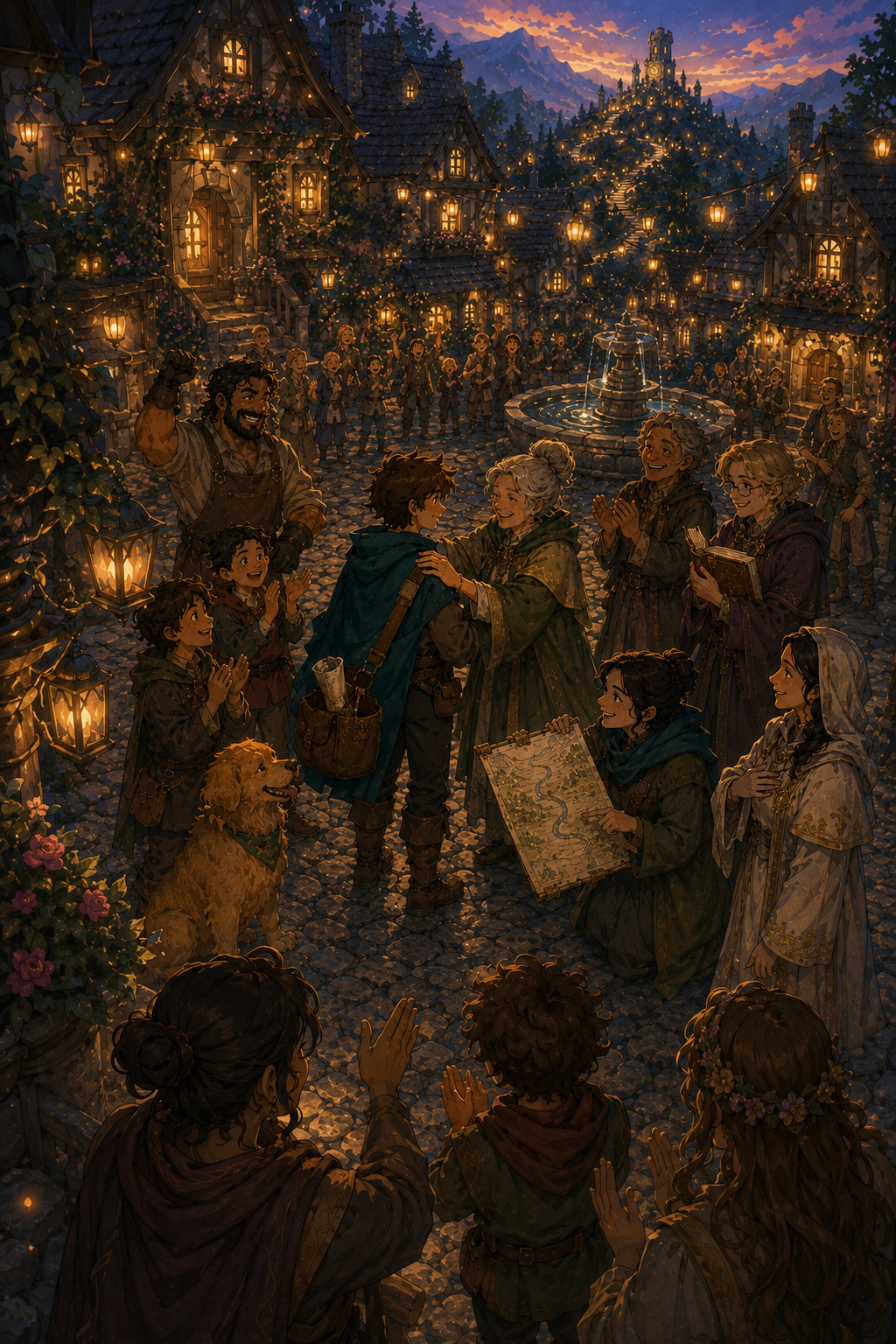
By evening, the blacksmith reads the tower clock, the librarian returns to her books, and the cartographer draws a straight road across a fresh page. Lanterns fill Maculara as the village gathers to honor the adventurer who brought the treasure home.
That adventurer is you. Now your choices reveal the kind of adventurer you have become.