








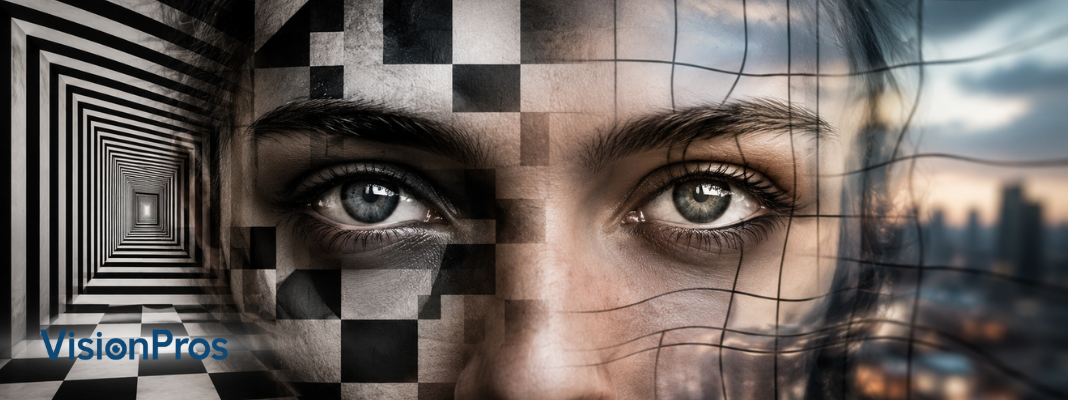
Optical illusions can make straight lines bend, colors shift, shapes move, or images appear where nothing is there. These visual tricks are harmless. They happen when your eyes and brain interpret an image in an unexpected way.
Vision problems are different. Blurred vision, double vision, distorted vision, or seeing wavy lines during normal activities can point to a change in eyesight. Knowing the difference helps you enjoy illusions without ignoring signs of vision problems.
Key Takeaways
- Optical illusions come from a specific image or pattern, and the effect fades once you look away.
- Vision problems show up in everyday life, not just in a designed image, and don’t fade with a blink.
- Try the interactive illusions and quizzes below to test your own eyes.
- If straight lines look wavy in daily life, or you notice sudden flashes or floaters, schedule an eye exam.
What Is an Optical Illusion and Why Does It Trick Your Brain?
Quick vision trivia #1
What Is an Optical Illusion?
Illusion 1. Müller-Lyer Illusion

The Müller-Lyer illusion is an optical illusion demonstrating that our brains do not perceive visual information in a vacuum. Discovered by German psychiatrist Franz Carl Müller-Lyer in 1889, it shows two line segments that appear to be different sizes because of the direction of the “arrowheads” or fins.
Tap anywhere to close
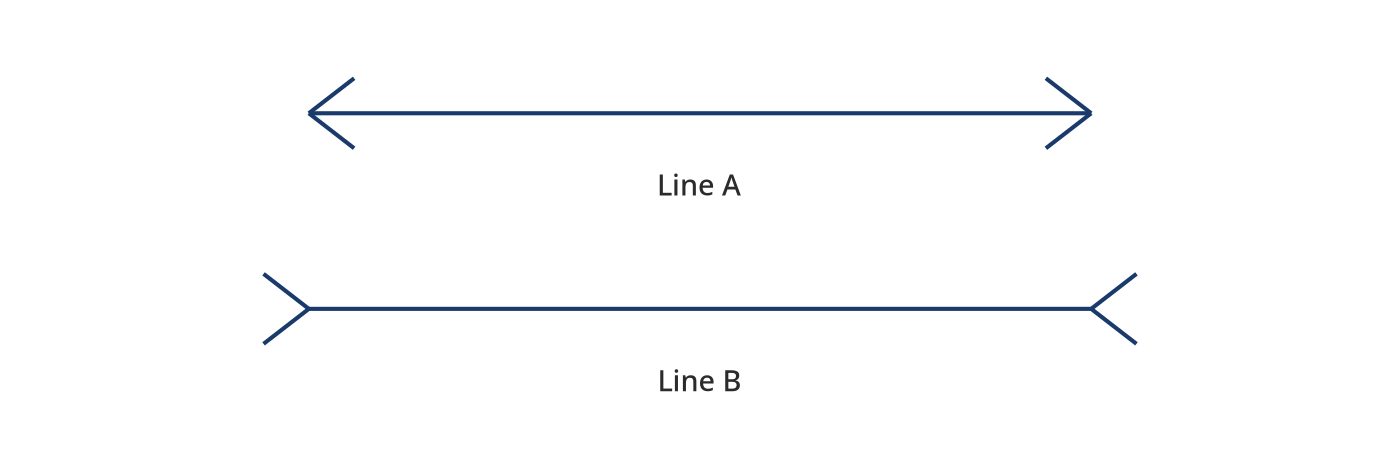
The Müller-Lyer illusion is an optical illusion demonstrating that our brains do not perceive visual information in a vacuum. Discovered by German psychiatrist Franz Carl Müller-Lyer in 1889, it shows two line segments that appear to be different sizes because of the direction of the “arrowheads” or fins.
Tap anywhere to closeClick the image to enlarge
Which line is longer?
Optical illusions trick your eyes, even when your vision is healthy. The illusion comes from how the brain interprets the image.
Common types of optical illusions include:
- Literal optical illusions that create an image that is not really there
- Physiological illusions caused by bright light, contrast, motion, or overstimulation
- Cognitive illusions that rely on assumptions about size, shape, distance, or perspective
Quick vision trivia #2
What Causes an Optical Illusion?
Illusion 2. Hermann Grid Illusion
The Hermann Grid illusion is an optical illusion where the brain misinterprets contrast boundaries at intersections. Discovered by Ludimar Hermann in 1870, the illusion is caused by the way retinal cells dynamically balance light and dark information in your peripheral vision.
Tap anywhere to close

The Hermann Grid illusion is an optical illusion where the brain misinterprets contrast boundaries at intersections. Discovered by Ludimar Hermann in 1870, the illusion is caused by the way retinal cells dynamically balance light and dark information in your peripheral vision.
Tap anywhere to closeClick the image to enlarge
Are there gray spots at the intersections?
How to Tell the Difference Between a Visual Trick and a Vision Change
The two horizontal lines are perfectly straight, even though the offset black and white squares make them appear to tilt. This is a classic example of how contrast and pattern cues can trick the brain, even when your vision is completely healthy.
Tap anywhere to close
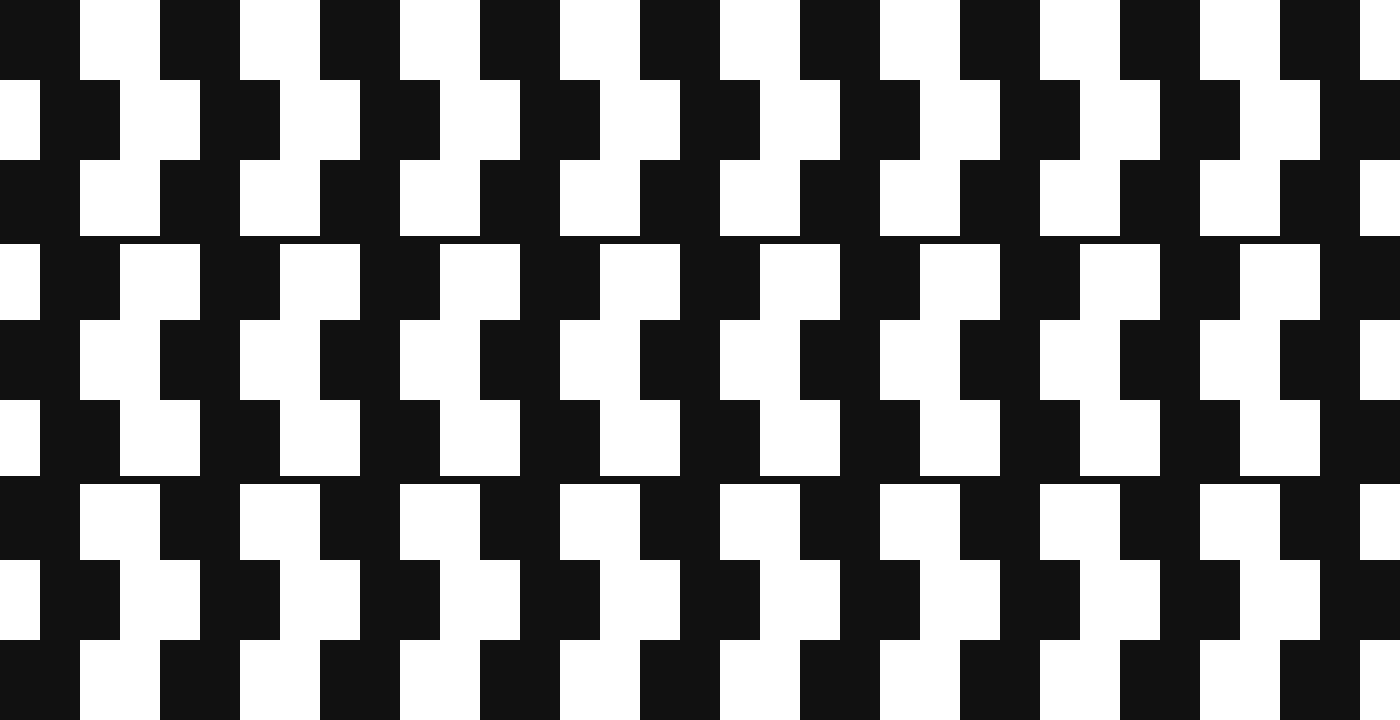
The two horizontal lines are perfectly straight, even though the offset black and white squares make them appear to tilt. This is a classic example of how contrast and pattern cues can trick the brain, even when your vision is completely healthy.
Tap anywhere to closeClick the image to enlarge
If straight lines, window frames, or grids look wavy or bent in everyday life, not just inside a designed illusion, it could be a sign of a vision change. Schedule an eye exam if this happens regularly.
Tap anywhere to close

If straight lines, window frames, or grids look wavy or bent in everyday life, not just inside a designed illusion, it could be a sign of a vision change. Schedule an eye exam if this happens regularly.
Tap anywhere to closeClick the image to enlarge
A vision change can show up while reading, driving, using a screen, looking at faces, or walking through familiar spaces.
When It’s an Optical Illusion
- The effect only appears with a certain image or pattern
- Other people see the same visual trick
- The effect fades after you look away
- Your normal vision feels clear afterward
When It’s a Vision Problem
- The distortion appears during everyday activities
- Straight lines look wavy, bent, or rippled
- Vision stays blurry after blinking or resting your eyes
- The change affects one eye more than the other
- The symptom is sudden, persistent, or getting worse
Common Vision Problems That Can Feel Like Optical Illusions
Some vision symptoms can feel strange enough to seem like an illusion. The difference is that they happen in real surroundings, not only while viewing a designed visual trick.
Blurred Vision and Double Vision
Blurred vision can make text, faces, lights, or distant objects look soft or unclear. Double vision can make one object appear as two. These symptoms can come from refractive errors, dry eye, eye strain, focusing issues, or other eye health concerns.
Stress and fatigue can also affect focus and comfort. VisionPros has more on stress-related blurred vision during tense or tiring periods.
Distorted Vision and Seeing Wavy Lines
Distorted vision can make objects look warped, stretched, tilted, or uneven. Seeing wavy lines is a common example. People notice it while looking at blinds, doorframes, tiles, or text on a screen. These changes can be signs and symptoms of vision problems when they appear suddenly, repeat often, or interfere with daily sight.
Flashes, Floaters, Halos, or Missing Spots
Flashes, floaters, halos, glare, shadows, or missing areas in vision are not the same as optical illusions. New or sudden changes should be checked by an eye doctor.
Why Straight Lines May Look Wavy, Blurry, or Bent
Straight lines can look wavy, blurry, or bent for various reasons. Eye strain, dry eyes, uncorrected astigmatism, and focusing problems can affect how sharply lines appear. Migraine aura can also create shimmering, zigzag patterns, blind spots, or distorted vision.
This is what an Amsler-style grid looks like with healthy central vision. Every line is straight, and the center dot is easy to focus on. Doctors sometimes use a grid like this to check each eye separately.
Tap anywhere to close
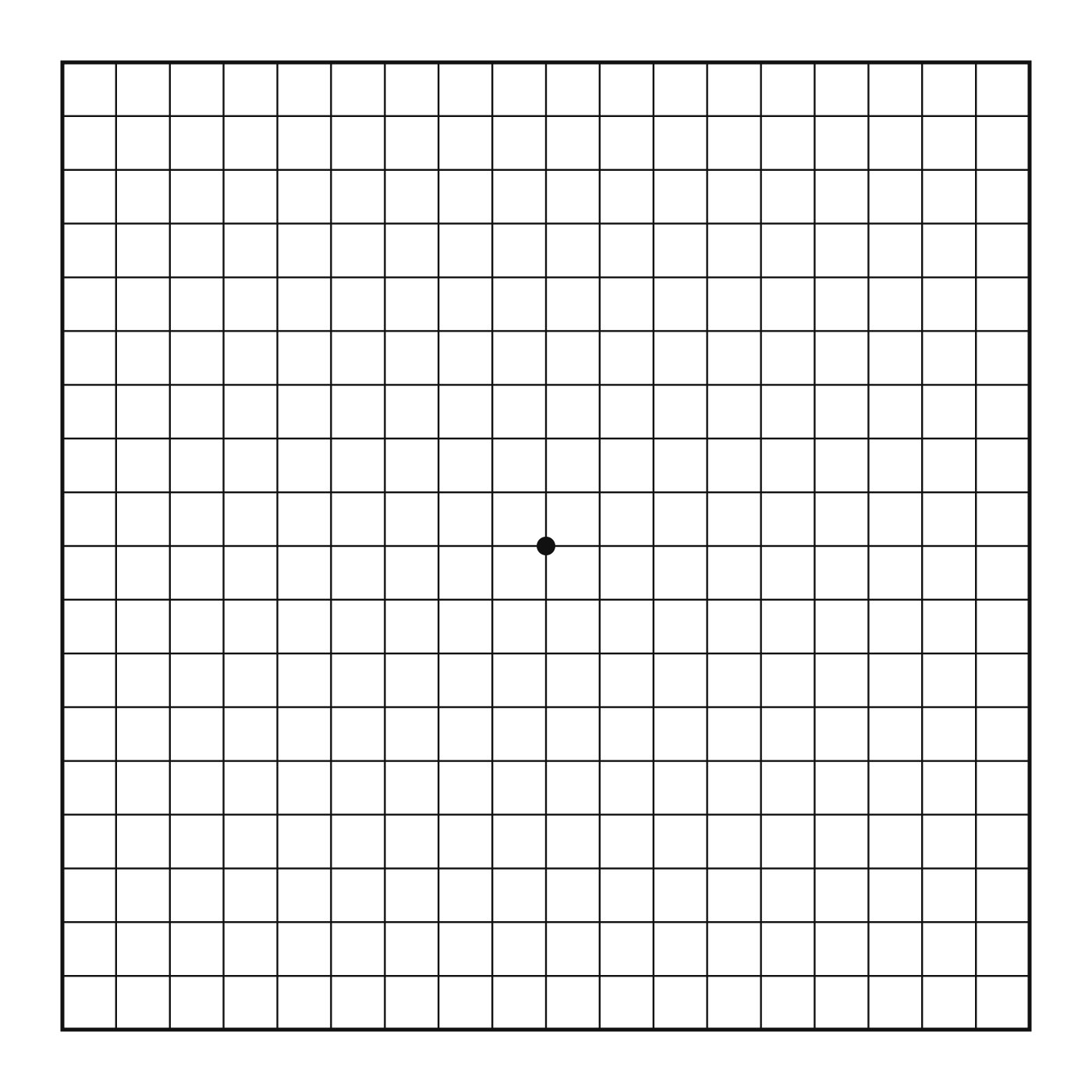
This is what an Amsler-style grid looks like with healthy central vision. Every line is straight, and the center dot is easy to focus on. Doctors sometimes use a grid like this to check each eye separately.
Tap anywhere to closeClick the image to enlarge
If real-world lines, grids, or window frames look wavy or bent like this, not just in a designed illusion, it can be a sign of a vision change such as a macular problem. New, one-sided, or worsening distortion should be checked by an eye doctor.
Tap anywhere to close
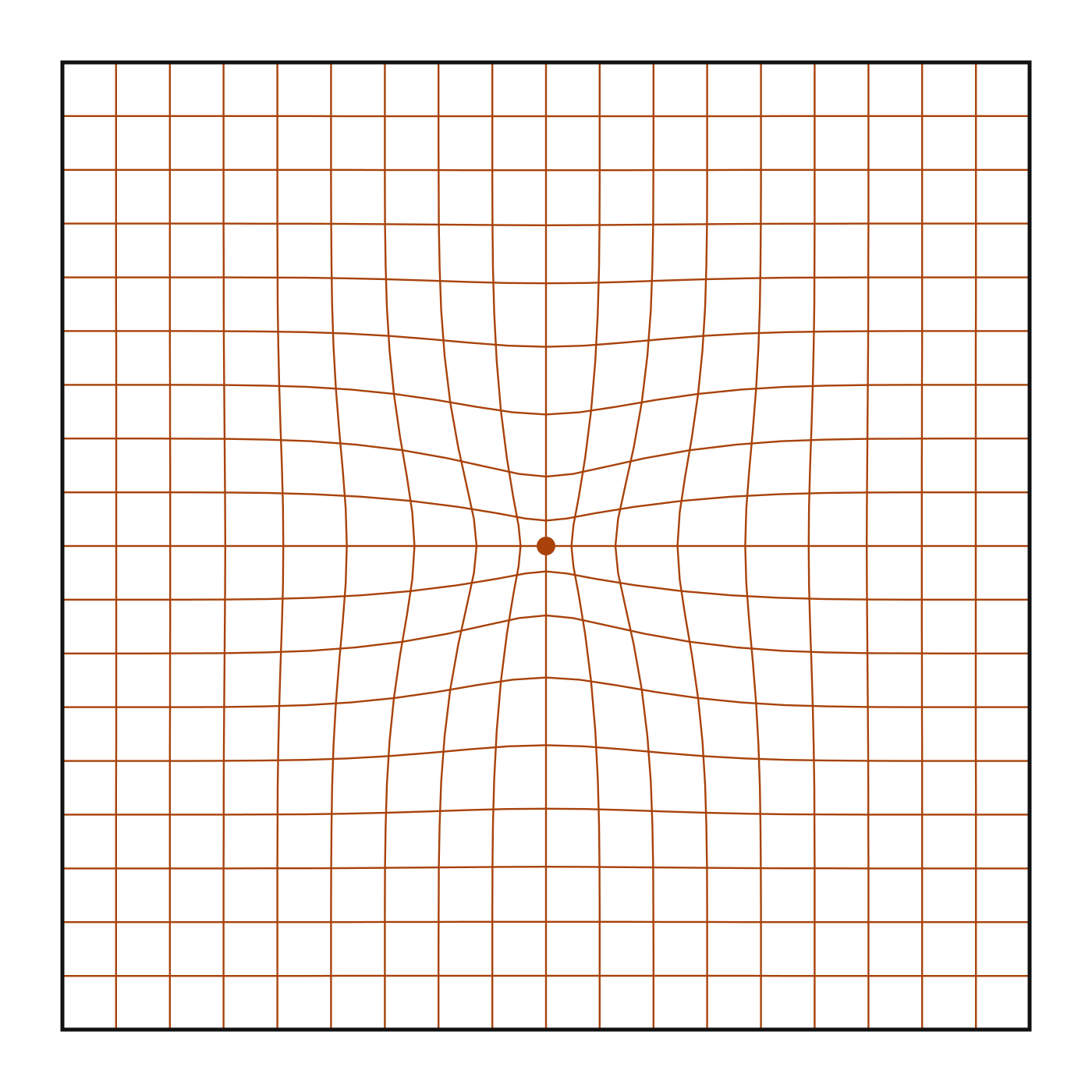
If real-world lines, grids, or window frames look wavy or bent like this, not just in a designed illusion, it can be a sign of a vision change such as a macular problem. New, one-sided, or worsening distortion should be checked by an eye doctor.
Tap anywhere to closeClick the image to enlarge
In some cases, wavy lines or warped shapes can be linked to changes involving the retina or macula. New, one-sided, lasting, or worsening distortion deserves an eye exam. If your vision still feels blurry after a recent eye procedure or known vision change, check back with your eye doctor.
When to Get an Eye Exam for Visual Distortion
Quick vision trivia #3
Which Symptom Should Prompt an Eye Exam?
Schedule an eye exam when visual distortion appears outside a specific image or pattern. A comprehensive dilated eye exam helps your eye doctor check eye health.
Optical Illusions and Vision Problems FAQs
Are optical illusions bad for your eyes?
No. Most optical illusions are not bad for your eyes. Take breaks if staring at one makes your eyes feel tired.
Can optical illusions mean you have an eye problem?
Usually, no. Concern starts when distortion appears in everyday vision rather than in an image or pattern.
What is the difference between an optical illusion and visual distortion?
An optical illusion comes from a specific image or pattern. Visual distortion affects how you see real objects, lines, lights, or spaces.
Why do optical illusions trick your eyes?
Optical illusions use contrast, color, depth, motion, and pattern cues that influence how the brain interprets visual information.
When should you get an eye exam for visual distortion?
Get an eye exam if distortion is sudden, persistent, one-sided, worsening, or paired with flashes, floaters, pain, missing vision, double vision, or headache.

Disclaimer:
This content is for general information only and is not meant to replace professional medical advice, diagnosis, or treatment.
- How Do Optical Illusions Trick Our Eyes? https://avcvisionsource.com/patient-care/blog/how-do-optical-illusions-trick-our-eyes/. Accessed July 10, 2026.
- Metamorphopsia: Causes, Symptoms, Diagnosis and Treatment. https://www.allaboutvision.com/conditions/metamorphopsia/. Accessed July 10, 2026.
- Optical Illusions. https://www.nei.nih.gov/eye-health-information/healthy-vision/nei-for-kids/optical-illusions. Accessed July 10, 2026.
- Optical Illusions and the Human Eye. https://www.allaboutvision.com/eye-care/eye-anatomy/optical-illusions-and-the-human-eye/. Accessed July 10, 2026.
- Optical Illusions and Vision Variability: Understanding Your Eyesight. https://evergreencos.com/optometry/optical-illusions-and-vision-variability-understanding-your-eyesight/. Accessed July 10, 2026.
- Optical Illusions: More Than Meets the Eye. https://visionsource.com/blog/optical-illusions-more-than-meets-the-eye/. Accessed July 10, 2026.
- Top 9 Causes of Visual Distortions. https://www.optometrists.org/general-practice-optometry/guide-to-eye-conditions/guide-to-blurry-vision-and-headaches/top-9-causes-of-visual-distortions/. Accessed July 10, 2026.
- Visual Illusions and Hallucinations: Causes, Symptoms, and When to Seek Help. https://www.brainandlife.org/articles/visual-illusions-hallucinations-causes-symptoms-when-to-seek-help. Accessed July 10, 2026.
- Visual Illusions and Optical Illusions Are Not the Same. https://www.psychologytoday.com/us/blog/the-life-the-mind/202108/visual-illusions-and-optical-illusions-are-not-the-same. Accessed July 10, 2026.
- What Are Optical Illusions? https://www.poudrevalleyeyecare.com/blog/what-are-optical-illusions-post/. Accessed July 10, 2026.
- What Optical Illusions Reveal About Eyesight. https://georgiaeyephysicians.com/what-optical-illusions-reveal-about-eyesight/. Accessed July 10, 2026.