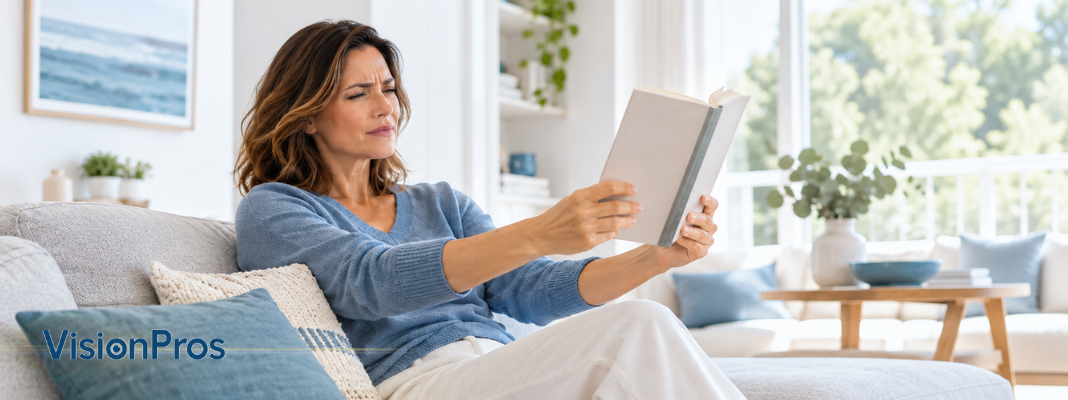









The right response depends on what is causing the irritation. Mild allergy, dryness, screen strain, or environmental irritation can improve after the trigger is reduced. Pain, vision changes, or strong light sensitivity need more attention.
Fall Eye Allergies
Itchy, watery eyes that worsen around pollen, ragweed, mold, or dust fit an allergy pattern. Try these steps:
- Wash your face after spending time outdoors
- Avoid rubbing your eyes
- Use cool compresses
- Use lubricating eye drops when appropriate
- Keep windows closed when pollen levels are high
- Wear sunglasses outdoors
Contact lens wearers should check whether an allergy eye drop is approved for use with lenses.
Dry and Irritated Eyes
Burning, stinging, grittiness, or intermittent blur can point toward dry eye, especially when symptoms worsen around wind, heating, or screens. Helpful habits include:
- Using lubricating artificial tears
- Taking regular screen breaks
- Blinking fully during computer work
- Keeping fans and vents away from your face
- Using a humidifier in dry rooms
See an eye doctor if dryness keeps returning or starts interfering with contact lens wear.
Digital Eye Strain
Long periods of screen use can leave the eyes tired, dry, blurry, or slow to refocus. Use the 20-20-20 rule. Every 20 minutes, look at something around 20 feet away for about 20 seconds. Reducing glare, increasing text size, and keeping the screen at a comfortable distance can also ease strain.
Managing Irritation From Dust and Smoke
Smoke, dust, yard debris, and fumes can leave the eyes red, watery, burning, or gritty. Move away from the irritant when possible and avoid rubbing the eyes.
Lubricating drops can rinse small particles from the eye surface. Wear protective eyewear when raking leaves, trimming plants, or working around flying debris. Pain, ongoing foreign body sensation, or vision changes need medical attention.
Pink Eye
Viral and bacterial conjunctivitis can spread from person to person. Good hygiene helps reduce that risk.
- Wash your hands often
- Avoid rubbing your eyes
- Do not share towels or pillowcases
- Avoid sharing eye makeup
- Stop wearing contact lenses while the eyes are red or producing discharge
Pain, strong light sensitivity, thick discharge, or vision changes call for an eye exam.
Fall Eye Care Tips for Contact Lens Wearers
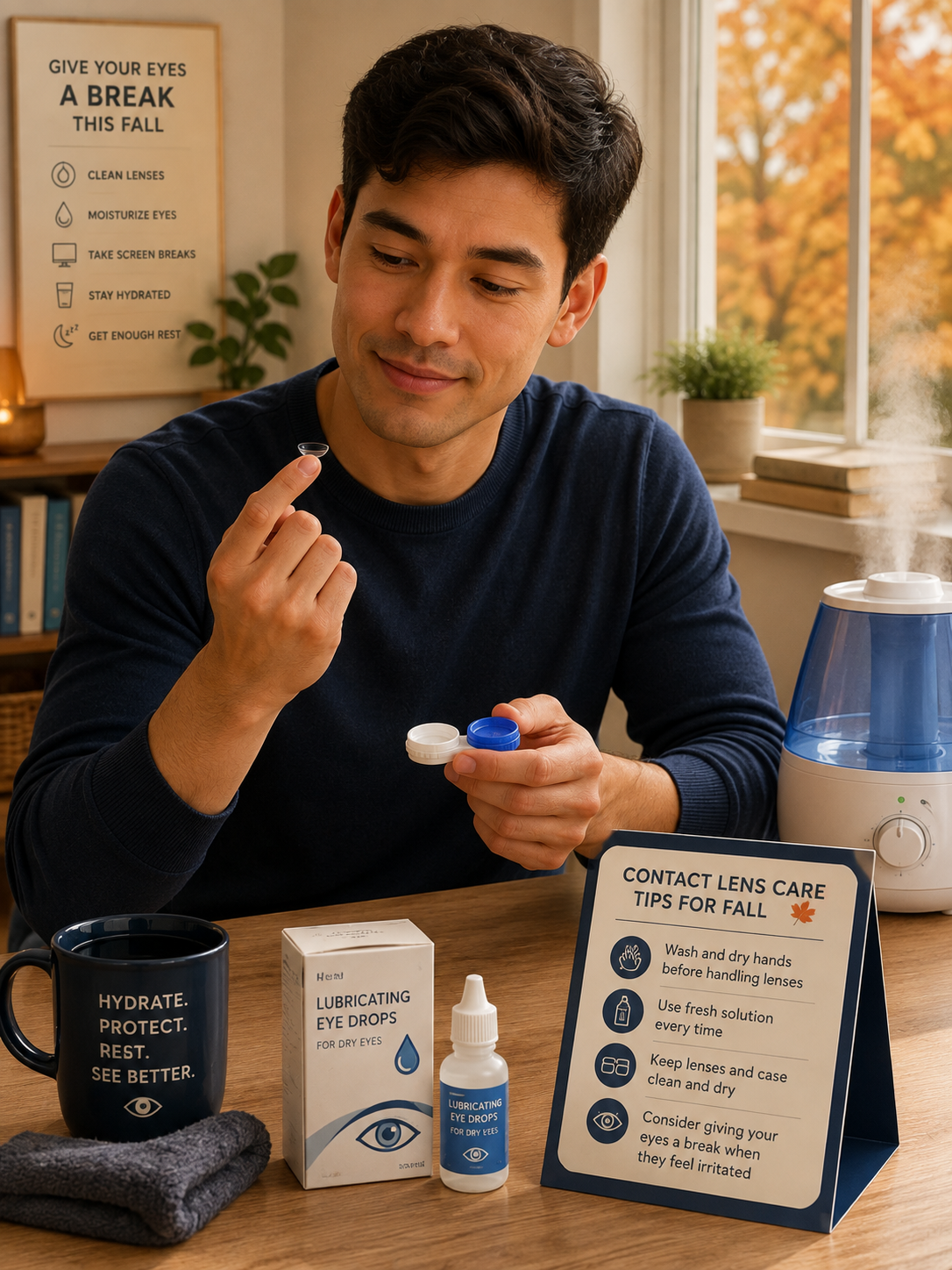
Fall allergies, dry air, indoor heating, and longer screen sessions can change how contact lenses feel through the day. A few adjustments to lens wear and care can help reduce irritation during the season.
Give Irritated Eyes a Break
Switch to glasses if your lenses start to feel unusually dry, scratchy, or uncomfortable. Take the lenses out right away if redness appears with pain, blurry vision, light sensitivity, or discharge.
Keep Lenses Clean
Wash and dry your hands before touching your contacts. Reusable lenses should be cleaned and disinfected according to their care instructions.
Pollen and deposits can collect on the lens surface. If allergy season repeatedly makes your lenses uncomfortable, talk with your eye doctor about your lens type and replacement schedule.
Follow Your Replacement Schedule
Replace daily, two-week, and monthly lenses on time. Wearing lenses beyond their prescribed schedule gives deposits and debris more time to build up.
Keep Contacts Away From Water
Do not swim, shower, or rinse contact lenses with tap water. Water can expose lenses to microorganisms linked with serious corneal infections.
How to Protect Your Eyes During Fall
A few seasonal habits can reduce exposure to common eye irritants.
Limit Exposure to Fall Allergens
Wash your face and hands after outdoor activities. Sunglasses can also block wind, pollen, and airborne particles.
Protect Your Eyes During Yard Work
Wear protective eyewear when raking leaves, trimming plants, or working around dust and debris. If loose debris enters the eye, rinse it with clean water rather than rubbing.
Keep Indoor Air Comfortable
Indoor heating can make dry eye symptoms more noticeable. Use a humidifier if the air feels dry and avoid sitting directly in front of heating vents. Cleaning vents and filters can also reduce circulating dust.
Wear Sunglasses During Fall
Lower sun angles can create strong glare during morning and evening driving. Sunglasses with ultraviolet protection can protect the eyes outdoors, while polarized lenses can reduce reflected glare.
Be Careful With Halloween Contact Lenses
Decorative contact lenses still need a prescription and proper fitting. Avoid costume contacts sold without a prescription. Poor fit, sharing lenses, or unsafe lens care can injure the eye and raise infection risk.
When to See an Eye Doctor for Eye Symptoms
Some eye symptoms should not be treated as routine fall irritation.
Eye Symptoms That Need Prompt Medical Attention
- Sudden vision loss
- A major change in vision
- Severe or worsening eye pain
- Strong light sensitivity
- Intense redness
- New flashes or a sudden increase in floaters
- A curtain or shadow across your vision
- A chemical splash
- A serious eye injury
- Painful redness while wearing contact lenses
- Blurry vision that stays after removing contacts
- Discharge with pain or light sensitivity
If a chemical enters the eye, rinse it with clean water immediately while seeking medical help.
FAQs About Fall Eye Symptoms
Why do my eyes get itchy in the fall?
Ragweed, pollen, mold, dust, and other allergens can trigger allergic conjunctivitis. Strong itching, watery eyes, redness, and puffy eyelids fit this pattern.
How can you tell eye allergies from dry eye?
Strong itching fits allergies more closely. Burning, stinging, grittiness, and symptoms linked with dry air or long screen sessions fit dry eye more closely.
How can you tell eye allergies from pink eye?
Eye allergies usually affect both eyes and cause itching with watery tears. Viral pink eye often starts in one eye with watery discharge, while bacterial pink eye is more closely linked with thick discharge and sticky eyelids.
Can fall allergies make contact lenses uncomfortable?
Yes. Pollen, tear film changes, and lens deposits can make contacts feel less comfortable. Switch to glasses if your eyes become irritated and talk with your eye doctor if the problem keeps returning.
When should I worry about eye redness?
Seek medical care when redness appears with severe pain, strong light sensitivity, sudden vision changes, marked swelling, an eye injury, or unusual discharge. Painful redness in a contact lens wearer needs prompt attention.
Disclaimer
The content on this page is for informational purposes only and should not take the place of professional medical advice, diagnosis, or treatment.
References
- Causes of Dry Eye. https://www.nei.nih.gov/eye-health-information/eye-conditions-and-diseases/dry-eye/causes-dry-eye. Accessed September 1, 2026.
- Clinical pearls for Autumn’s allergies. https://www.aoa.org/news/clinical-eye-care/diseases-and-conditions/clinical-pearls-for-seasonalallergies. Accessed September 1, 2026.
- Computer vision syndrome. https://www.aoa.org/healthy-eyes/eye-and-vision-conditions/computer-vision-syndrome. Accessed September 1, 2026.
- Contact Lens Risks. https://www.fda.gov/medical-devices/contact-lenses/contact-lens-risks. Accessed September 1, 2026.
- Eye Allergies | Causes, Symptoms & Treatment. https://acaai.org/allergies/allergic-conditions/eye-allergy/. Accessed September 1, 2026.
- How to Treat Pink Eye. https://www.cdc.gov/conjunctivitis/treatment/index.html. Accessed September 1, 2026.
- Pink Eye: Causes and How It Spreads. https://www.cdc.gov/conjunctivitis/causes/index.html. Accessed September 1, 2026.
- Symptoms of Pink Eye. https://www.cdc.gov/conjunctivitis/signs-symptoms/index.html. Accessed September 1, 2026.
- What Causes Contact Lens-related Eye Infections. https://www.cdc.gov/contact-lenses/causes/index.html. Accessed September 1, 2026.