








Humidity can mess with contact lens comfort in ways that feel random. Lenses can look cloudy, vision can get hazy, and eyes can feel dry even when the weather is humid. If you’ve noticed foggy vision after stepping out of air-conditioning, or you keep searching for ways to keep your contacts moist, this guide is for you.
Below is a practical breakdown of what humidity does to contacts, quick fixes that help fast, and habits that keep lenses clearer and more comfortable day to day.
What To Do When Contacts Feel Off In Humidity
- Blink a few times fully and look away from screens for 20 seconds.
- Use contact-safe rewetting drops (not redness drops).
- If vision still looks smeared, remove the lens, rinse with fresh multipurpose solution, then reinsert.
- If the lens keeps getting cloudy, switch to glasses and stop forcing it.
What Is Humidity?
Humidity is the amount of water vapor in the air. High humidity feels damp and heavy. Low humidity feels dry and is common indoors with air-conditioning or heating.
How Humidity Impacts Contact Lens Comfort And Clarity
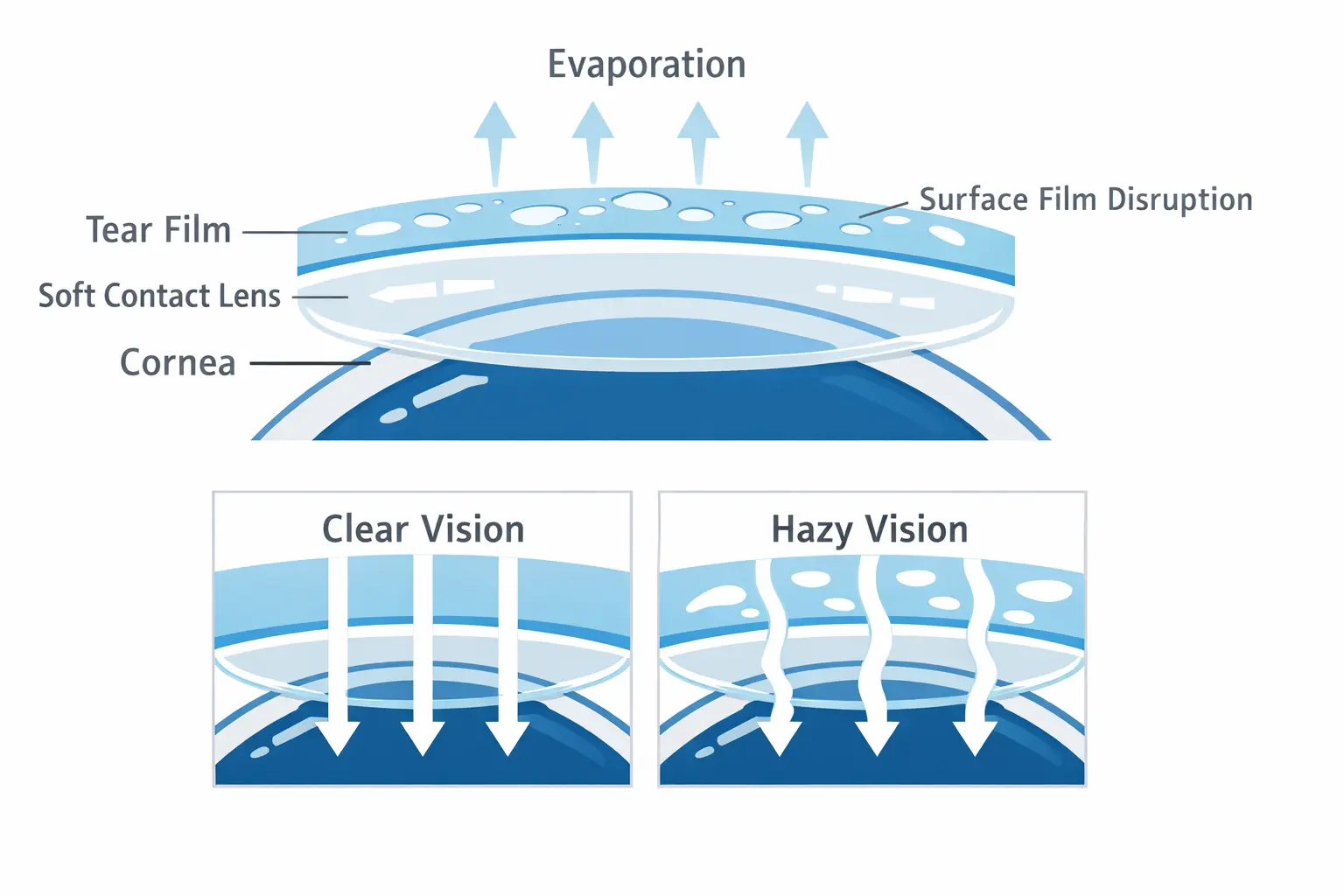
Soft contact lenses hold water to stay flexible. But comfort isn’t only about the lens holding water — it’s also about what’s happening on the lens surface and how stable your tear film is.
Humidity can affect:
- How your tear film spreads across the lens
- How fast your tears evaporate indoors
- How oils and debris stick to the lens surface
- How clear your vision looks during long wear
- Foggy or cloudy vision
- Blur that comes and goes
- Dry, scratchy feeling
- Filmy or slippery lens feel
What Happens To Contacts In High Humidity?
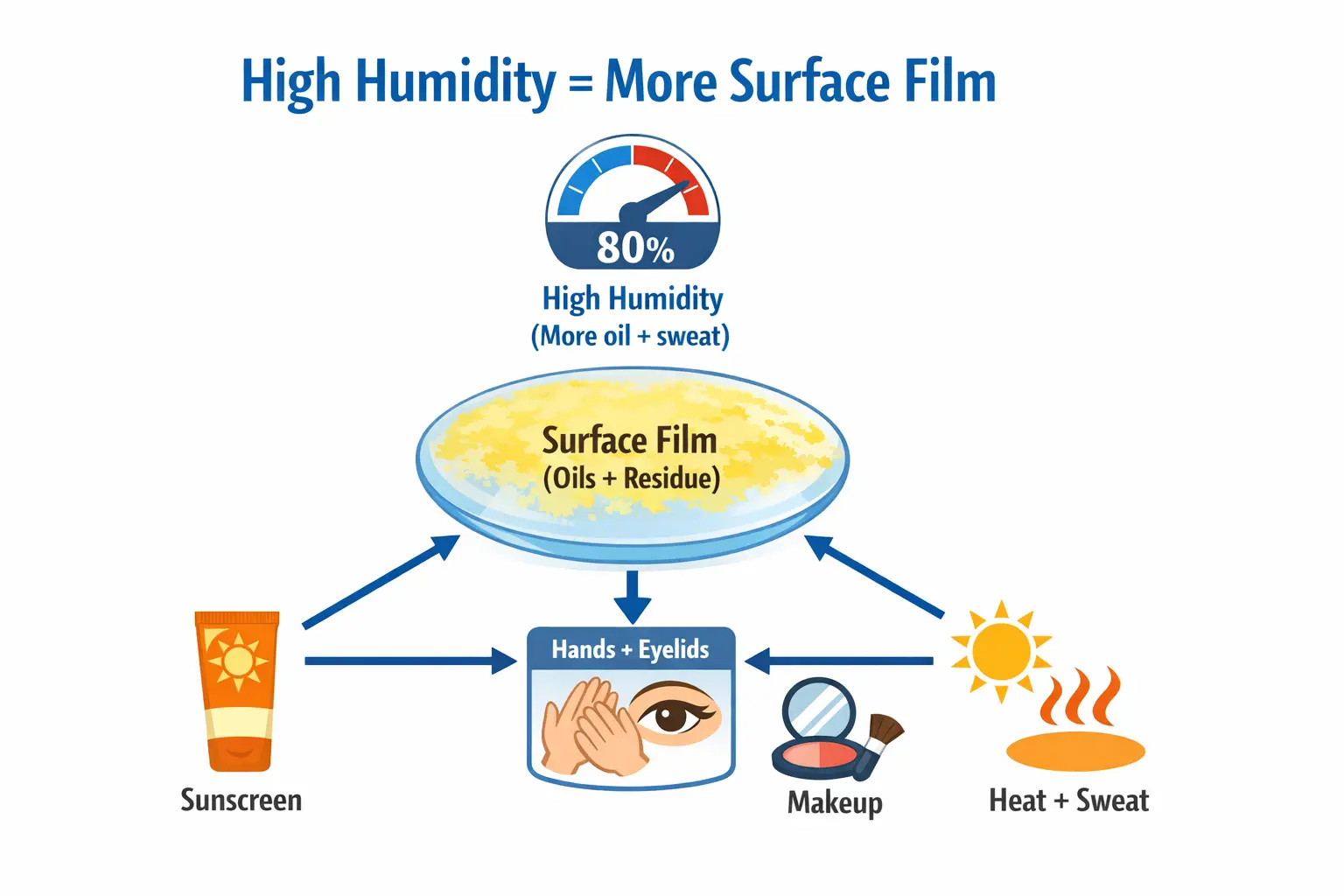
High humidity can make lenses feel slippery or filmy. It can also trigger blur that comes and goes.
More Lens Film From Oils And Products
Humid weather often means oilier skin. Sunscreen, moisturizer, and makeup are also more common in these conditions. That combination can leave a thin film on the lens surface that looks cloudy and doesn’t fully clear with blinking.
Blur That Comes And Goes
If your tear film spreads unevenly, you can get momentary clarity right after blinking, then haze again. It’s annoying because it feels like the prescription is wrong — but it’s usually a surface issue.
“Steamy” Moments When Moving Between AC And Outdoors
Walking out from cold air-conditioning into hot humid air can make vision feel hazy for a short time. Cooking steam and hot showers can do the same thing.
What Happens To Contacts In Low Humidity?
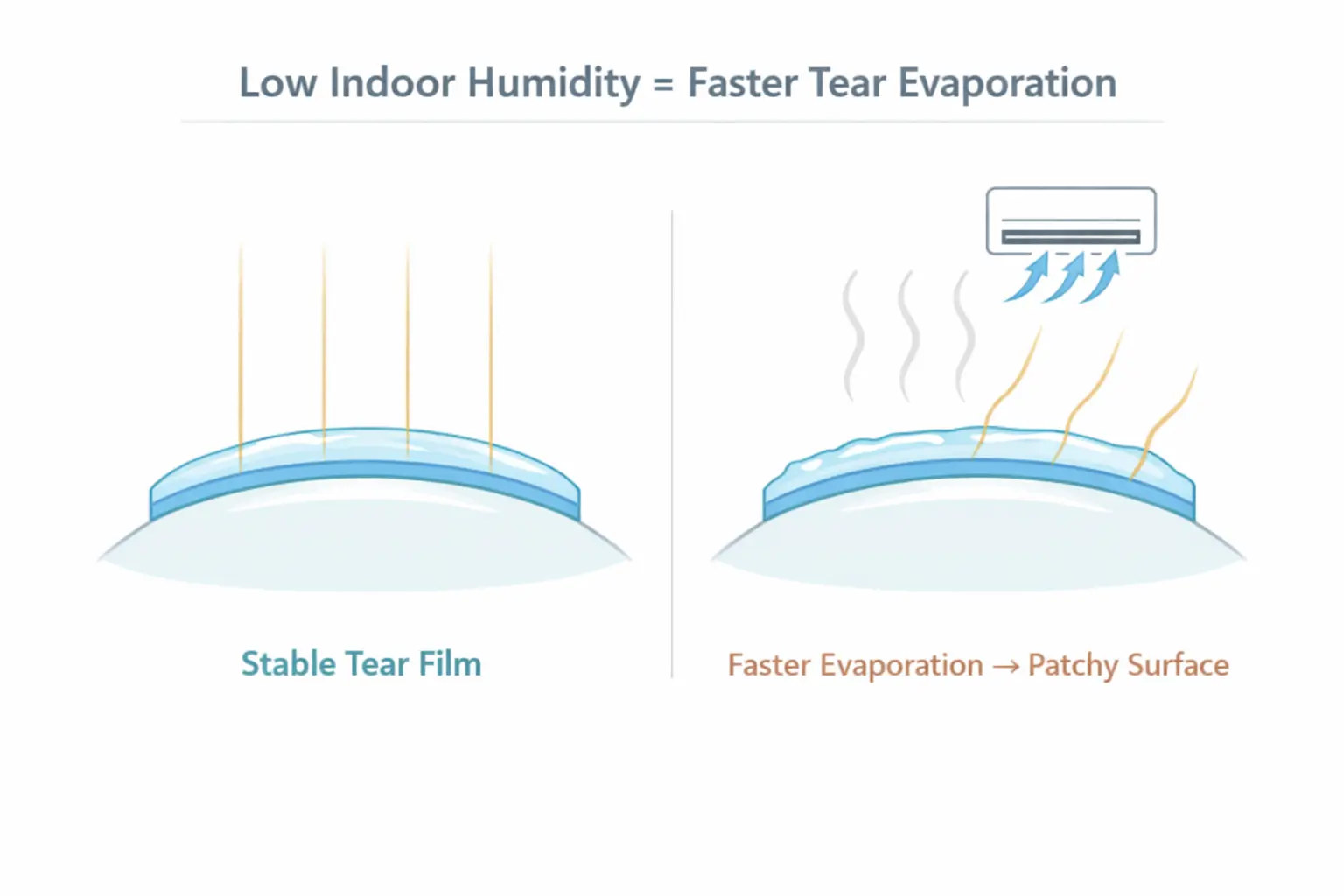
Low humidity is a common trigger for dryness. Many people feel this indoors more than outdoors.
Faster Tear Evaporation
Dry indoor air can thin the tear film. When that happens, the lens surface gets patchy and vision can look smeared.
Screen Time Makes It Worse
Screens reduce blink rate. Less blinking means less moisture spread evenly over the lens, so dryness builds faster.
End-Of-Day Discomfort
Even if lenses feel fine in the morning, dryness can show up late afternoon. That’s when people start searching “how to keep contacts moist.”
Do Contact Lenses Fog Up Or Get Cloudy In Humidity?
Yes, fogging or cloudiness can happen in humid conditions. Most of the time, it’s not the lens “absorbing too much water.” It’s usually one of these:
- Oil or skincare residue on the lens surface
- Tear film breakup causing patchy blur
- Deposits building up on reusable lenses
- Dry indoor air causing a smeared surface
- A lens that’s inside-out or slightly torn
Essential Tips To Manage Contact Lenses In Humidity
Use Rewetting Drops The Right Way
Use drops labeled safe for contact lenses. Use them before discomfort gets bad, especially if you work in air-conditioning, spend hours on screens, or feel blur starting around mid-day.
Skip redness drops unless your eye doctor told you to use them. Redness relief is not the same as rewetting.
Reduce Skincare And Sunscreen Transfer
This is one of the most common reasons contacts look cloudy on humid days. Try these habits:
- Apply sunscreen and moisturizer first, then wash hands before handling lenses
- Let face products dry before touching your eyes
- Avoid heavy creams right before lens insertion
- Keep liner and mascara away from the waterline if you get frequent lens film
If lenses get cloudy mid-day and you suspect product film, removing and rinsing with fresh solution can help quickly.
Tighten Hygiene, Especially With Reusable Lenses
Warm, humid conditions can support more microbial growth around the eyes and lens gear. Hygiene matters more, not less.
- Use fresh solution every time — don’t top off
- Replace the case regularly
- Follow replacement schedules closely
- Rub lenses if your solution instructions include it
If you notice “gunky” eyes with contacts, hygiene is one of the first things to audit.
Keep Contacts Moist During Long Days
- Drink water earlier in the day
- Take short screen breaks and do a few full blinks
- Redirect AC vents away from your face if possible
- Use rewetting drops before symptoms spike
- Ask your eye doctor if a different lens material or schedule fits better if issues repeat often
Consider Daily Disposables If Humidity Triggers Buildup
If you deal with frequent film, haze, or allergy season discomfort, daily disposables can be easier because you start fresh each morning. That’s helpful in humid conditions where oils, sweat, and debris can build up faster.
Why Do My Eyes Look Gunky With Contacts?
“Gunky eyes” often means mucus, thicker tears, or discharge that sticks to the lens. Common causes include:
- Allergies — more watering and mucus can coat the lens
- Dry eye — thicker tears and debris can build up faster
- Overwear or poor hygiene — old solution, old cases, or overdue lenses can irritate the eye
When It’s Not Just Humidity
Humidity can cause discomfort. It shouldn’t cause intense pain. Remove your lenses and wear glasses if you notice any of the following:
- Sharp pain
- Strong redness that’s getting worse
- Light sensitivity
- Sudden drop in vision that doesn’t clear
- Thick discharge
Shop At VisionPros
Humidity affects contact lenses in two main ways. High humidity can lead to surface film and foggy vision from oils and product transfer. Low humidity indoors triggers dryness and patchy blur, especially with long screen time. The fix is usually simple — better drop timing, cleaner handling, and small routine changes that protect the tear film.
Shop Contact LensesIf humidity keeps making lenses uncomfortable, it’s worth asking your eye doctor about switching lens materials or trying daily disposables.
Need help comparing lens options or placing an order? Contact VisionPros customer service at 1-866 VISION-6 (1-866-847-4666) or email service@visionpros.com.
Frequently Asked Questions About Humidity And Contact Lenses
- What Is Humidity? NOAA NESDIS. https://www.nesdis.noaa.gov/about/k-12-education/atmosphere/what-humidity. Date Accessed: February 23, 2026.
- About Cleaning, Disinfecting, and Storing Contact Lenses. CDC. https://www.cdc.gov/contact-lenses/about/about-cleaning-disinfecting-and-storing-contact-lenses.html. Date Accessed: February 23, 2026.
- Preventing Eye Infections When Wearing Contacts. CDC. https://www.cdc.gov/contact-lenses/prevention/index.html. Date Accessed: February 23, 2026.
- About Contact Lens Types. CDC. https://www.cdc.gov/contact-lenses/about/about-contact-lens-types.html. Date Accessed: February 23, 2026.
- Digital Devices and Your Eyes. American Academy of Ophthalmology. https://www.aao.org/eye-health/tips-prevention/digital-devices-your-eyes. Date Accessed: February 23, 2026.
- Computers, Digital Devices, and Eye Strain. American Academy of Ophthalmology. https://www.aao.org/eye-health/tips-prevention/computer-usage. Date Accessed: February 23, 2026.
- How to Take Care of Contact Lenses. American Academy of Ophthalmology. https://www.aao.org/eye-health/glasses-contacts/contact-lens-care. Date Accessed: February 23, 2026.
- Contact Lens-Related Eye Infections. American Academy of Ophthalmology. https://www.aao.org/eye-health/diseases/contact-lens-related-eye-infections. Date Accessed: February 23, 2026.
- Contact Lens Care. American Optometric Association. https://www.aoa.org/healthy-eyes/vision-and-vision-correction/contact-lens-care. Date Accessed: February 23, 2026.
- Contact Lenses: Safe Use of Hydrogen Peroxide Solution. U.S. Food and Drug Administration. https://www.fda.gov/consumers/consumer-updates/contact-lenses-safe-use-hydrogen-peroxide-solution. Date Accessed: February 23, 2026.