








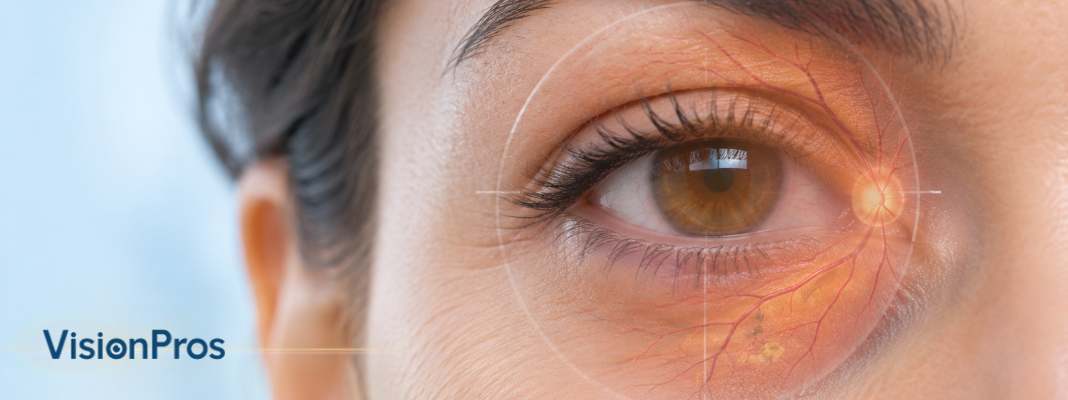
Yes, diabetes can affect your vision without noticeable symptoms. High blood sugar can gradually damage blood vessels in the retina, even when your eyesight seems perfectly normal. This condition, called diabetic retinopathy, can progress before you notice anything wrong. Regular eye exams help detect early changes and reduce the risk of permanent vision loss.
How Does High Blood Sugar Affect Your Eyes?
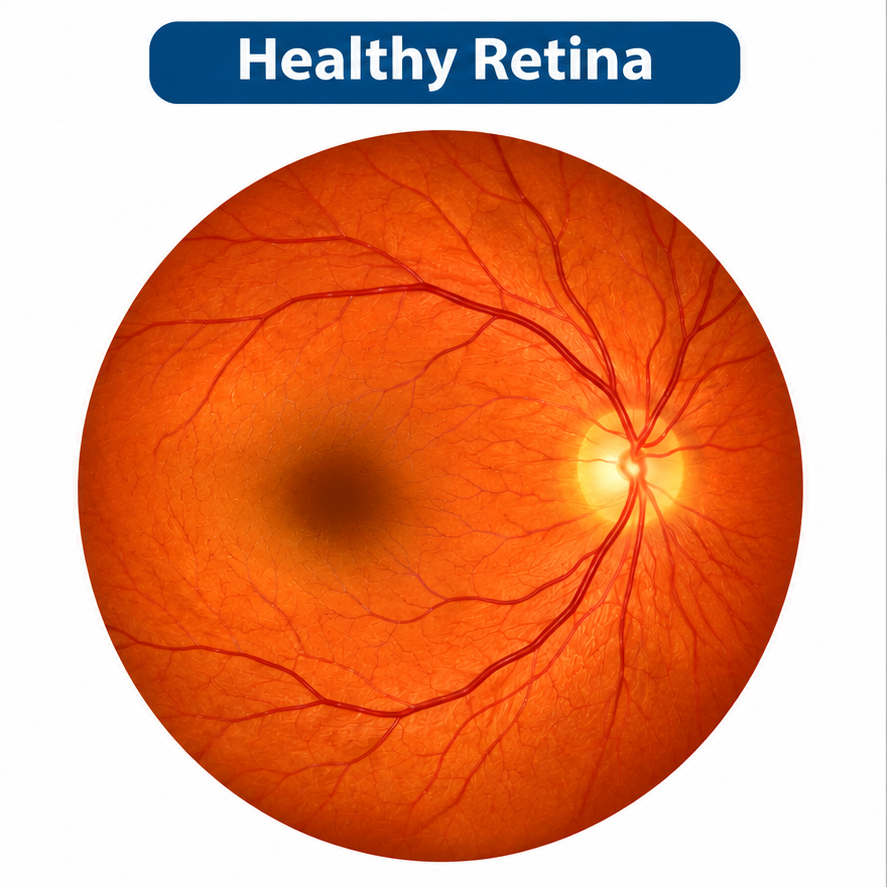
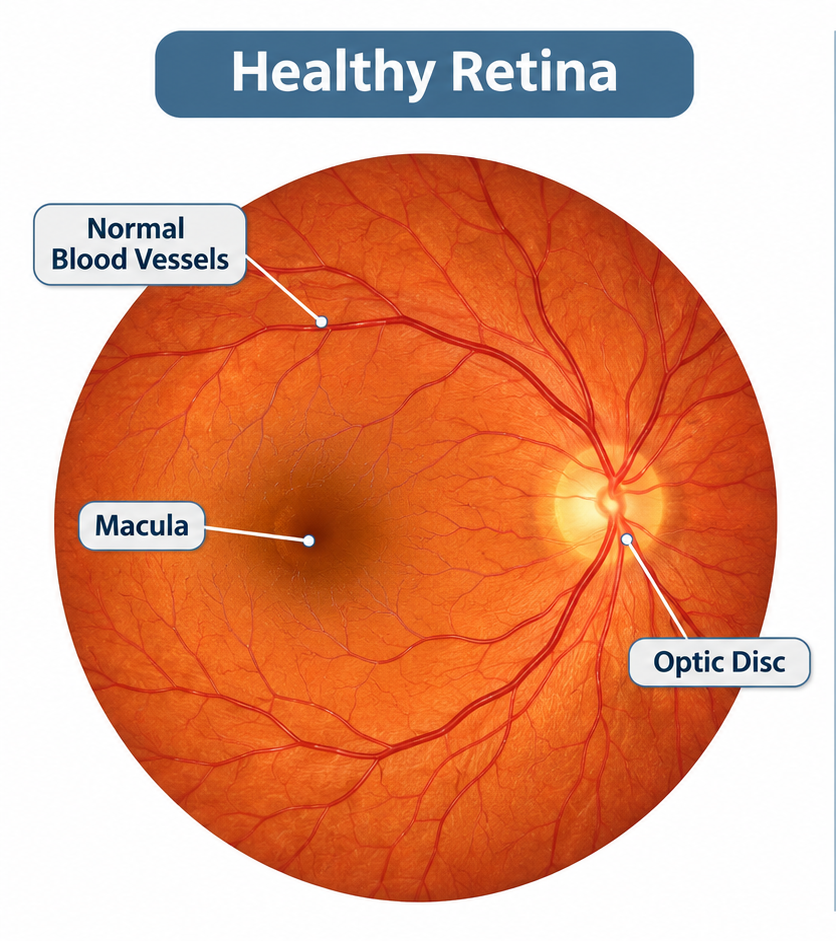
Diabetes affects how your body regulates blood sugar. When blood sugar levels remain elevated, they can damage the tiny blood vessels that supply oxygen and nutrients to your retina, the light-sensitive tissue at the back of your eye.
How Diabetes Damages Blood Vessels in the Retina
High blood sugar can gradually damage retinal blood vessels in several ways.
- Leaking vessels release blood or fluid into surrounding retinal tissue.
- Blocked vessels restrict oxygen and nutrients from reaching parts of the retina.
- Abnormal vessel growth can occur as the retina responds to reduced blood flow.
These changes can develop before noticeable vision problems appear.
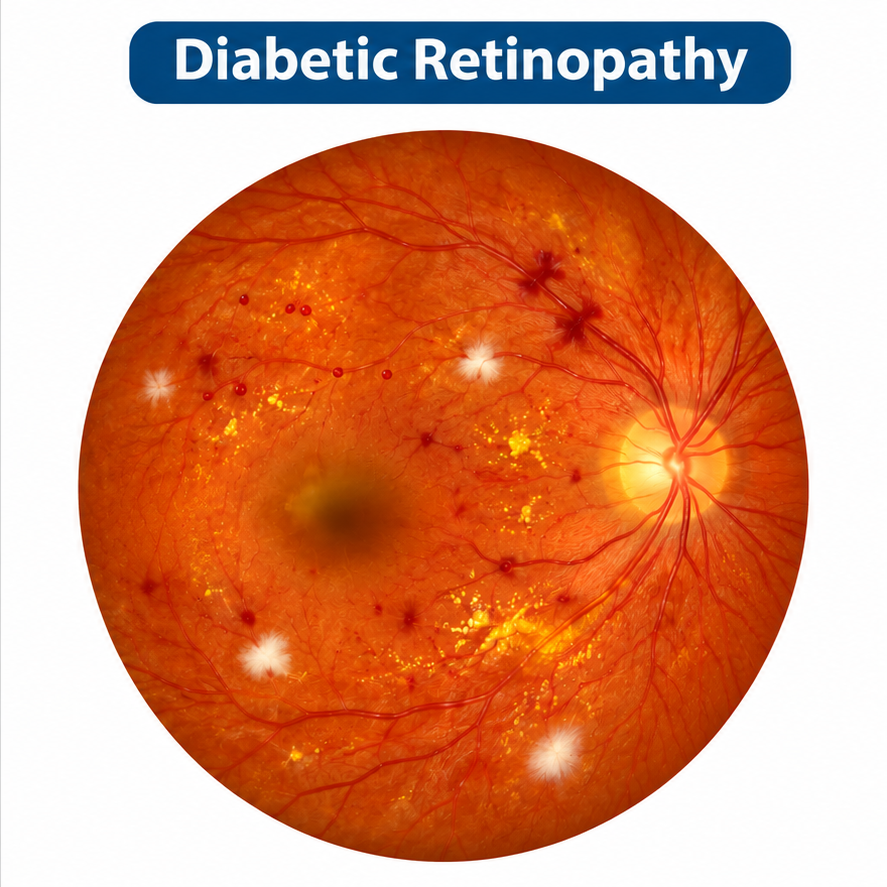
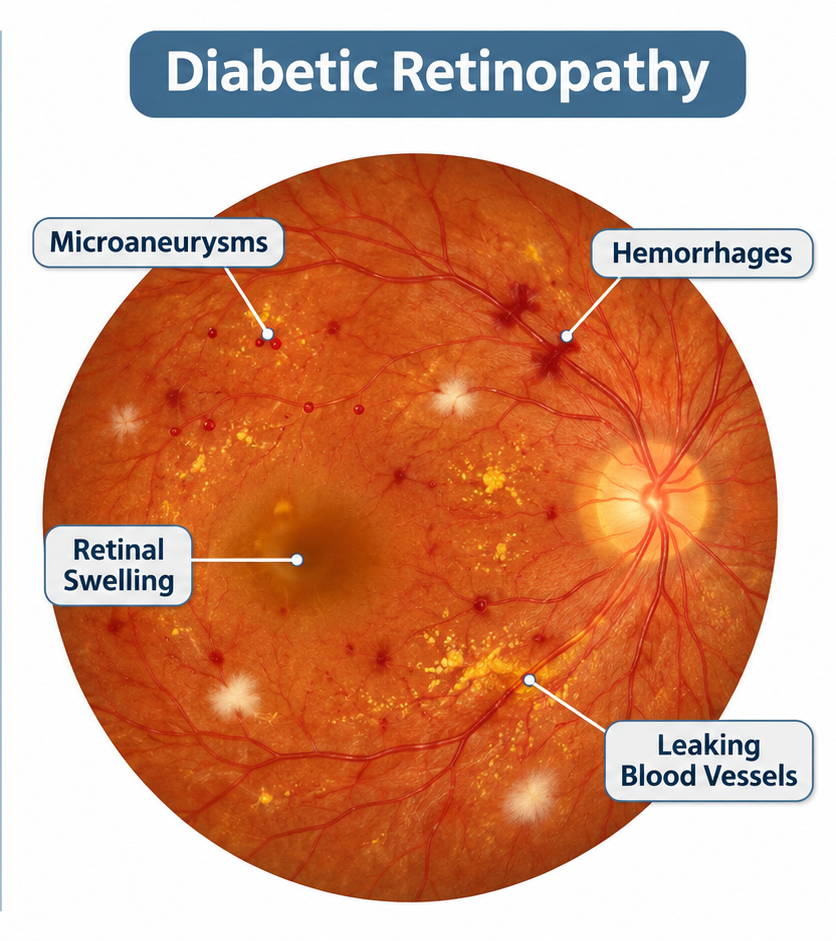
Can You Have Diabetic Eye Damage and Still See Clearly?
Yes. People with diabetic retinopathy can maintain 20/20 vision while damage develops in their retinas.
Early changes can affect areas outside the central retina, leaving detailed vision intact. Even habits like squinting to see better aren’t reliable indicators of retinal health. Clear eyesight doesn’t necessarily mean your eyes are free from diabetes-related damage.
Can Diabetic Retinopathy Develop Without Symptoms?
Diabetic retinopathy is a leading cause of vision loss among people with diabetes. Its early stages typically develop without pain, blurry vision, or other noticeable warning signs.
Early Stages of Diabetic Retinopathy
Nonproliferative diabetic retinopathy (NPDR) is the earlier stage of the condition. During this stage, retinal blood vessels develop tiny bulges called microaneurysms, which can leak blood or fluid.
Mild NPDR typically causes no noticeable symptoms. As the condition progresses, more vessels become damaged or blocked, increasing the risk of vision problems.
Diabetic Macular Edema and Retinal Swelling
Diabetic macular edema occurs when damaged retinal blood vessels leak fluid into the macula, the area responsible for sharp central vision.
Small amounts of swelling can go unnoticed initially. More pronounced swelling can cause blurry or distorted vision, particularly when reading or recognizing faces.
What Are the Warning Signs of Diabetic Eye Disease?
Although early diabetic eye disease can develop silently, noticeable symptoms can appear as retinal damage progresses.
Blurred Vision, Floaters, and Dark Spots
Changes in eyesight are signs of diabetic eye disease.
- Blurred or fluctuating vision
- Dark spots or floating shapes
- Difficulty reading or seeing fine details
- Trouble seeing clearly at night
- Blank or distorted areas in your vision
These symptoms can have other causes, so an eye examination is necessary to determine what’s happening.
Normal Vision vs. Diabetes-Related Vision Changes



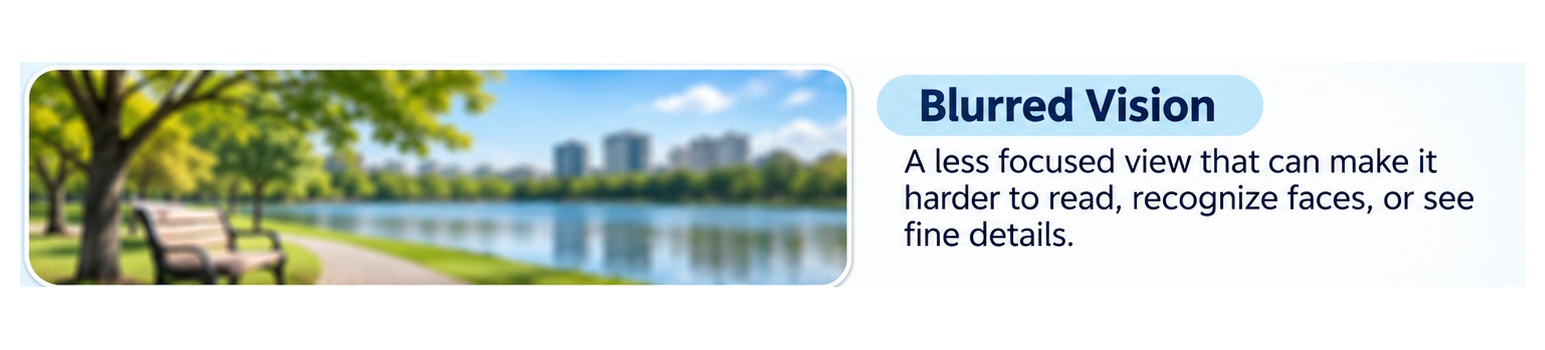


These are examples of possible vision changes from diabetic eye disease. Symptoms can vary from person to person.
Sudden Vision Changes That Need Urgent Medical Attention
Certain symptoms require immediate medical evaluation.
- Sudden or severe vision loss
- A rapid increase in floaters
- Flashes of light
- A dark curtain or shadow across your vision
These changes can indicate retinal bleeding, retinal detachment, or another serious eye condition. Seek urgent eye care rather than waiting for your next scheduled examination.
How Can Eye Doctors Detect Diabetic Eye Disease Early?
Eye doctors can identify retinal changes before they affect your eyesight through diabetic retinopathy screening and specialized examinations.
Dilated Eye Exams and Retinal Imaging
A diabetic eye examination can involve several tests.
- Dilated eye exam uses special drops to widen your pupils so the eye doctor can examine the retina and optic nerve.
- Retinal photography captures images that document changes in retinal blood vessels.
- Optical coherence tomography (OCT) creates detailed cross-sectional images to detect retinal swelling and fluid accumulation.
These tests can reveal problems that a standard vision chart cannot detect.
Diabetic Eye Exam and Early Detection
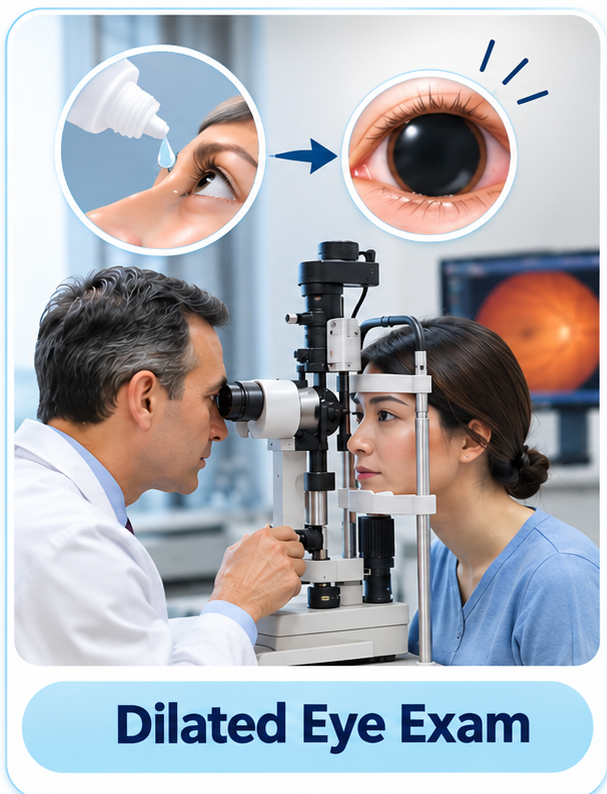
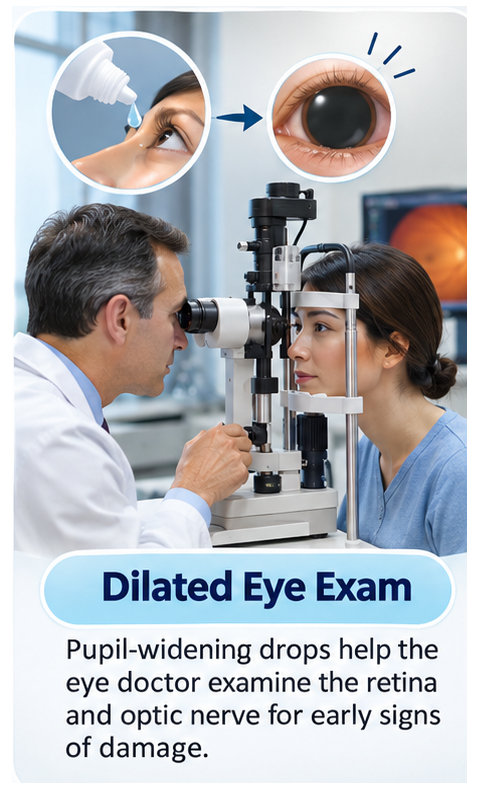
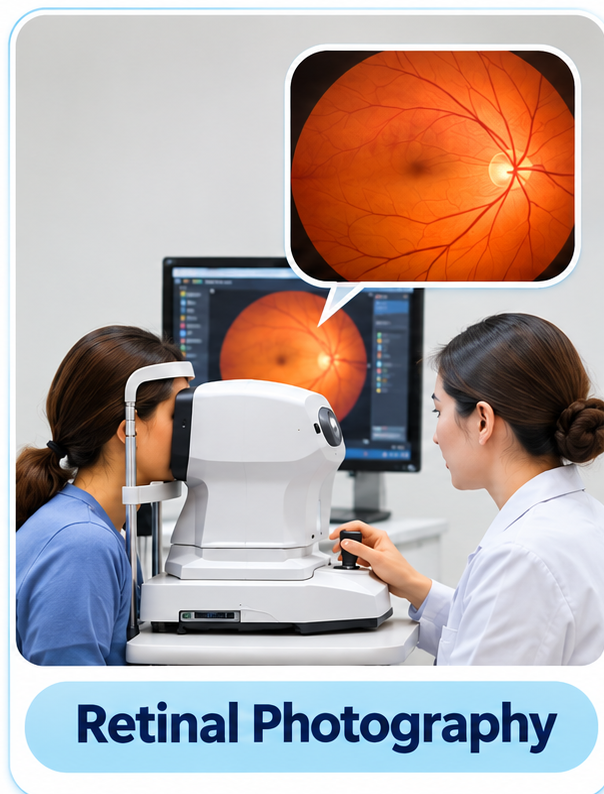
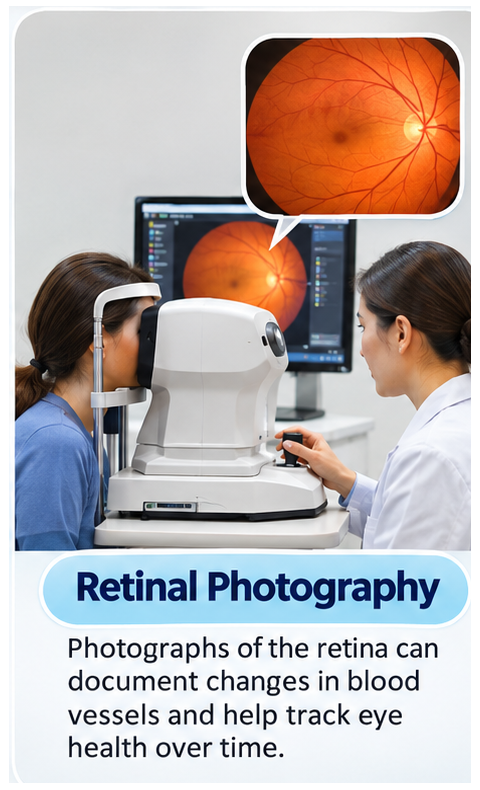
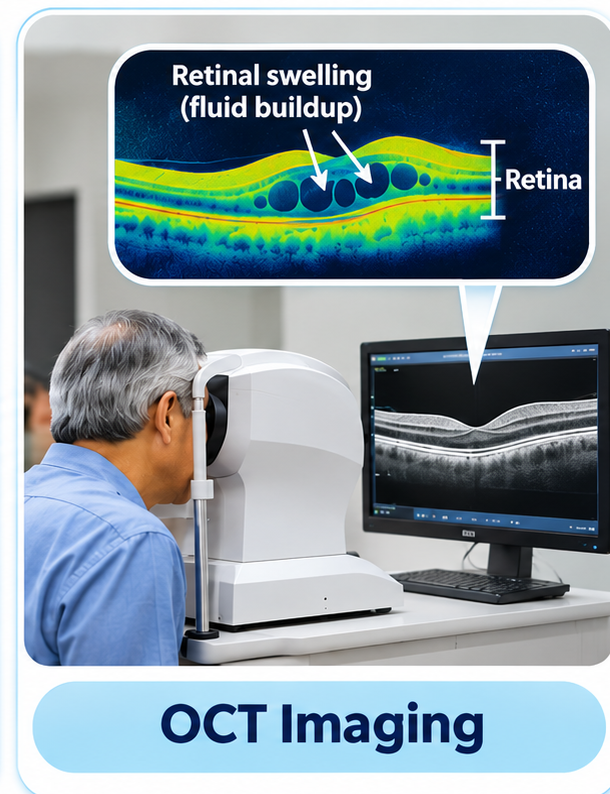
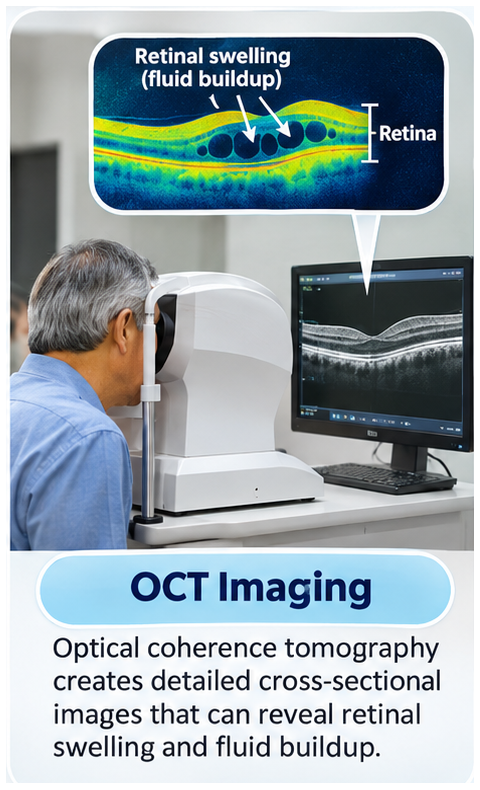
These tests can help detect diabetic eye disease before noticeable vision changes begin.
When Should Adults With Diabetes Get Their First Eye Exam?
The American Diabetes Association recommends different screening schedules depending on diabetes type.
After the initial examination, follow-up appointments typically occur annually. Your eye doctor can recommend a different schedule based on retinal health, blood sugar control, and individual risk factors.
How Can You Protect Your Vision From Diabetes?
Managing diabetes and monitoring eye health can reduce the risk of developing diabetic retinopathy or slow its progression.
Managing Blood Sugar, Blood Pressure, and Cholesterol
Keeping blood sugar, blood pressure, and cholesterol within your recommended target ranges helps protect retinal blood vessels. You can manage diabetes through changes in daily habits.
- Eating balanced meals
- Staying physically active
- Taking prescribed medications
- Monitoring blood sugar as directed
- Attending routine medical appointments
Regular Eye Exams and Early Treatment
Routine dilated eye exams remain important even when your vision feels normal. Regular examinations are among the recommended eye care tips for protecting your sight, particularly for people with diabetes.
Early detection gives eye doctors an opportunity to monitor retinal changes and recommend treatment when necessary. Depending on the condition, treatment can include eye injections, laser procedures, or surgery to limit further vision loss.

Common Questions About Diabetes and Vision
Can high blood sugar cause temporary blurry vision?
Yes. Changes in blood sugar can affect fluid balance within the eye’s lens, temporarily altering its focusing ability. Vision can improve as blood sugar stabilizes, although persistent blurriness requires an eye examination.
Can diabetes cause cataracts and glaucoma?
Yes. People with diabetes have an increased risk of cataracts, which cloud the eye’s natural lens, and glaucoma, a group of conditions that damage the optic nerve.
Can diabetic eye damage be reversed?
Some retinal changes and swelling can improve with treatment. Permanent damage and lost vision aren’t necessarily reversible. Early detection and appropriate treatment can help preserve remaining vision.
Disclaimer: This content is meant for general information only and should not replace medical advice, diagnosis, or treatment from a qualified eye care professional.
References
- Retinopathy, Neuropathy, and Foot Care. Standards of Care in Diabetes. https://diabetesjournals.org/care/article-lookup/doi/10.2337/dc26-S012 Accessed November 3, 2026.
- Diabetes and Your Eyes. What You Need to Know. https://www.hopkinsmedicine.org/health/expert-qa/diabetes-and-your-eyes-what-you-need-to-know Accessed November 3, 2026.
- Diabetic Eye Disease. https://www.niddk.nih.gov/health-information/diabetes/overview/preventing-problems/diabetic-eye-disease Accessed November 3, 2026.
- Diabetic Retinopathy. https://www.nei.nih.gov/eye-health-information/eye-conditions-and-diseases/diabetic-retinopathy Accessed November 3, 2026.
- Vision Loss and Diabetes. https://diabetes.org/health-wellness/eye-health/vision-loss-diabetes Accessed November 3, 2026.
- Vision Loss and Diabetes. https://www.cdc.gov/diabetes/diabetes-complications/diabetes-and-vision-loss.html Accessed November 3, 2026.